Brian Hoey, ’90, M.S. ’92, recalls that early on at NIU, an anthropology professor asked him what his major was, and when he told him it was biology, the professor said he would never look at the world the same way again.
“It had a profound influence on me – and he was right!” he said.
While Hoey didn’t envision being in law enforcement growing up, his love of science and math, combined with an inspirational visit from a DNA criminology expert while at NIU, set him on a path for success in a fascinating career.
Hoey, who holds bachelor’s and master’s degrees in biology from NIU and an M.B.A. from William Woods University in Missouri, retired in June 2026 as the laboratory director of the Missouri State Highway Patrol Crime Laboratory, a position he had held since January 2018.
Hoey began at the Missouri State Highway Patrol in 1993 as a criminalist and forensic scientist working in DNA. He eventually moved up the ladder, serving as a laboratory supervisor, manager and assistant director before being named director.
“The greatest reward was the mission, the purpose: doing science for victims of crime, a job they could not do for themselves,” he said. “Later in my career, the reward was leading scientists whose work genuinely mattered to victims, families and the justice system.”
He continued, “That same mission was also the challenge: the work carried real meaning, the stakes were high, and the responsibility of it all, was both challenging and rewarding.”
Hoey worked many important cases over the years. Two of them stand out in particular.
The first was the October 2000 plane crash that claimed the life of Missouri Governor Mel Carnahan as well as the governor’s son and an aide.
“We worked directly on the samples to identify the people aboard, running them around the clock for roughly a week straight,” Hoey said. “It was a geniune tragedy, and being part of that effort was one of the most demanding and meaningful things I was ever involved in.”
The second case was in 2011, when a devastating EF5 tornado hit the Missouri town of Joplin. The storm killed 158 people.
“By then I was a manager, no longer working samples on the bench, but I led the group of DNA scientists who identified victims of the tornado,” Hoey said. “Being able to give those families answers — to play a part in that — is the kind of thing that reminds you why this work matters.”
Hoey acknowledged the modern popularity of true crime TV shows, podcasts and other media. He said the biggest misconceptions are the complexity of most cases and the pace at which cases are solved.
“Real casework is far more involved — and far slower — than an hour of television suggests,” he said. “The other thing is a kind of selection bias. The cases that make it onto true-crime shows and podcasts are the ones that resolved cleanly and satisfyingly; that’s what makes them compelling to watch. The vast majority of forensic work doesn’t look like that, and the everyday reality of the lab rarely makes for good TV.”
Hoey grew up in the Chicago suburb of Calumet City, with parents who were both involved in education. His father was a teacher and later administrator at Fenger High School in Roseland and his mom began a job as a librarian at Wentsworth Junior High in Calumet City when Hoey began high school. As a child, Hoey had a love for science and math, and the wonder of how things work.
“I did really well in science in high school, especially anatomy and physiology, which was my first real passion,” he said. “That led me to biology at NIU.”
Hoey had a feeling that he belonged the minute he first visited NIU, despite first looking at other schools.
“I was comfortable with the size and the sense of community at NIU,” he said. “I toured a couple of departments — biology and music — and the professors actually engaged with me. They talked with me, asked about my ambitions and what I wanted to do and made me feel welcome. At a lot of the larger universities I felt like just another number. NIU made me feel like I belonged, like I was part of the campus and the community from the moment I stepped onto it. That was a good feeling.”
While he loved science, it was when he experienced a talk by Dennis Reeder, who was a researcher in forensic science, at NIU that lit a spark under Hoey to explore forensic DNA.
“Dennis was from the National Institute of Standards and Technology, and as he described the opportunities in the field, something just clicked,” Hoey said. “This was the late ’80s and early ’90s, right when forensic DNA had exploded. The technique had been developed in the UK by Alec Jeffreys in 1985 and made its way to the United States around 1987 or ’88 — right as I was finishing my undergraduate work at NIU. The timing was perfect for me.”
Hoey also had a number of science professors who impacted him at NIU and became his mentors, including Neil Polans, Mitch Altschuler and Dan Olson.
“Dan was the anatomy lab coordinator, and even though I focused on molecular biology in graduate school, I was a teacher’s assistant for anatomy — and in that role, and well beyond it, Dan had an enormous influence on me,” he said.
Hoey hadn’t planned on going to graduate school, but recalled someone coming into the lab while he was working as an independent study senior and saying that there was grant money available and not enough students in the graduate programs.
“I’d had no intention of going to graduate school, but the people around me in the biology department encouraged me, and it all happened in a matter of weeks,” he recalled. “I took the GRE, passed, applied, and was in. I graduated in August and started graduate school about a week later.”
Hoey describes achieving his master’s degree from NIU as a “huge unlock.”
“I honestly can’t say how much was NIU itself, how much was the department and how much was simple serendipity — but it gave me a leg up that not many people had back then, especially in forensic science,” he said. “It set me on my trajectory from the very start, and I have only Northern Illinois University to thank for that.”
Hoey said NIU took a “pretty unremarkable kid and made him somewhat remarkable.”
“Going from a bench analyst all the way to director of a laboratory system running seven labs with 129 employees, none of that would have been possible without what I learned at NIU,” he said. ” And I don’t just mean the academics. I mean the lessons about community, culture, friendships, relationships and connections. The collective experience of being on a campus like NIU’s made me the person I became, made possible the career I had and gave me the ability to now enjoy a well-earned retirement.”
This is just one example of how NIU prepares students for impactful careers. Discover how NIU is fortifying our future at niuforward.com.
Carmen Houde has known since middle school that she wanted to pursue a career in music education.
Now, working toward a Bachelor of Music degree with an emphasis in music education, the Bradley, Illinois, native plans to graduate in May 2027. She hopes to teach band or general music and says she would be “content anywhere I am able to make music with my students.”
“It was during middle school that I fell in love with music and discovered how beneficial it can be in one’s life,” Houde said. “I decided I wanted to help others find that passion for music as well. My ultimate goal is to create an environment for future generations of students to find kindness, confidence and perseverance through engaging with music.”
Although Houde didn’t grow up in a musical household — her mother is a hospice nurse, and her father works for a mineral company — music still became a family calling. Both she and her younger brother, who will attend Southern Illinois University this fall, chose to pursue music education.
Houde’s decision to attend NIU was shaped by the warmth and support she felt from the School of Music during the admissions process.
“I knew that NIU had a good music education program, and I figured that if the staff were this supportive before I had even committed, it must mean I would have a strong support system around me to help me thrive,” she said.
That support has extended to financial assistance as well. Houde has earned several scholarships, including the Leigh A. Williams Memorial Endowed Music Scholarship and the William Kalber Marching Band Student Scholarship. She is deeply grateful to those who invest in student success and she encourages Huskies to give when they can.
“Scholarships are a crucial aspect of providing all people with access to higher education,” she said. “By investing your financial support in student scholarships, you are giving students from various backgrounds and walks of life an opportunity to pursue their educational and career goals.”
She added, “Your financial support allows students to fully dedicate themselves to their education without having to focus on how to pay for it. Without scholarship support, I would not have been able to achieve my goals in becoming an educator and touching the lives of our future generations. Your support can help students like me reach their goals, too.”
On campus, Houde stays deeply involved in music making. A French horn and mellophone player, she performs in several ensembles that challenge and inspire her.
“I have earned the first chair horn positions in both the Philharmonic Orchestra and Wind Ensemble, which are the most prestigious classical ensembles the School of Music has to offer,” she said. “I’m also part of the Horn Studio, where I get to play in smaller chamber groups such as a horn choir and a horn quartet this semester.”
She is also a proud member of the Huskie Marching Band.
“I’m entering my third year serving as a mellophone ‘UG,’ the term we use for ‘section leader’ here in the HMB, which has been the highlight of my time at NIU,” she said. “Part of the joy that comes with being involved in the Huskie Marching Band is the community fostered through working toward a shared goal and passion, and as an UG I have gotten to create and be a part of an amazing crew.”
“I joined the executive board so I could guarantee my peers had more opportunities to grow as future music educators,” she said. “We host bi-weekly meetings that range from educational events covering music ed topics to study nights and teacher appreciation events that build community within our school.
“We were also lucky to travel to the Illinois Music Education Conference in Peoria this past January, which gave us a significant professional development opportunity while representing NIU’s music program at the state level.”
Houde credits her success to the faculty who have guided her with respect, encouragement and high expectations. She says her horn instructors, Emma Sepmeier and Renee Vogen, along with NIU Director of Huskie Bands Dr. Thomas Bough, have been especially influential.
“They have always been extremely supportive and led me to pursue leadership opportunities at NIU that have been tremendously beneficial to my growth as a scholar, musician and future educator,” she said. “They have always believed in me, and I would not be where I am today without them.”
To help Huskies like Carmen achieve their goals, please visit the NIU Forward website.
When Rachel Schreiber reflects on what prepared her most for life after graduation, she credits the moments where learning moved beyond theory and into practice — where responsibility, people and problem-solving came together.
“Experiential learning played a major role in preparing me for my career,” Schreiber said. “It gave me real‑world experience and helped me learn to work with people outside my peer group, something you can’t fully get in a classroom.”
Today, Schreiber serves as development operations coordinator for United Way of Dane County in Madison, Wisconsin, where she oversees data and operations for the fundraising team. She also coordinates and facilitates training for employee campaign managers and specialists.
Schreiber’s pathway to this role was shaped steadily through leadership opportunities, internships and hands-on involvement during her time at NIU. She earned a bachelor’s degree in nonprofit and NGO studies, with minors in social entrepreneurship and sociology, an academic combination that helped connect her interests in community, service and organizational impact.
“NIU helped me find opportunities that I didn’t even know existed, which has led me to my career today,” Schreiber said.
Outside the classroom, she sought out experiences that allowed her to apply that framework. As a Northern ambassador, Schreiber served as a tour guide for prospective students, becoming both a storyteller for NIU and a first point of connection for future Huskies. The role required confidence and adaptability — skills that developed quickly through repeated interaction. She later assumed a leadership position as a Northern ambassador supervisor, responsible for supporting peers and managing expectations.
“You’re constantly interacting with new people,” Schreiber said. “That role really helped me build confidence and communication skills.”
At the same time, Schreiber deepened her commitment to service as chapter director for Kesem, a national nonprofit supporting children affected by a parent’s cancer. Working closely with student volunteers as the chapter liaison, she gained insight into how successful mission-driven work is not just about bringing together passionate individuals but also having a strong behind-the-scenes organization. The role taught her how to lead with accountability and collaboration.
“It felt like I was running a small nonprofit as a student, giving me real-time, hands-on experience,” she said.
Schreiber’s internships further reinforced that lesson. As an events intern with Aurora (Illinois) Downtown, Schreiber helped facilitate events and supported efforts highlighting local businesses. She quickly learned that community-based work demands creativity and flexibility.
“There are so many moving parts,” she said. “You learn that clear communication, preemptive coordination and adaptability go a long way in making things run smoothly.”
Later, as a marketing intern with CASA DeKalb County, Schreiber gained experience that would later directly inform her career path. She helped plan and execute a key fundraiser, created a newsletter template and supported donor communications through database work. The experience exposed her to development work and data — paving the way for her role at the United Way.
Across her internships and leadership roles, Schreiber says the most lasting lessons were not just technical but interpersonal. Navigating professional environments taught her when to speak up, when to seek guidance and how to set expectations.
“I learned how to ask for help when I needed it and how to ask for more work when I was ready,” she said. “I also learned how to set goals and follow through in a real workplace.”
Those skills now show up daily in her work at United Way of Dane County, where much of her impact happens behind the scenes. While her role isn’t always visible, it is essential to the organization’s fundraising efforts and long-term effectiveness.
“A lot of my job is supporting others so they can be successful,” she said. “That means managing systems, working with data and helping people feel prepared and confident.”
Looking back, Schreiber sees a clear throughline between her NIU experiences and her professional role — each opportunity building on the last, shaping both her skills and her sense of purpose.
“Leadership roles, internships and classes all worked together,” she said.
When asked about the value of experiential learning for students, her answer comes easily.
“I think it plays a big role in helping students feel set up to succeed academically and professionally,” she said. “It teaches you how to advocate for yourself and how to navigate a real workplace, which makes the transition after graduation so much smoother.”
Help power transformational experiences at NIU that launch professional careers — Learn more at niuforward.com.
For John Wonak ’76, M.B.A. ’08, and Ann Wonak, ’76, M.S.Ed. ’98, NIU has been a defining part of their lives. The Double Huskies are now channeling their time, experience, and gratitude into what they proudly call their “payback careers.”
In this chapter, post-primary careers, John and Ann are deeply committed to strengthening Huskie connections and supporting programs that open doors for NIU students. Their goal is simple: support the university so it can continue supporting students.
“Northern serves a diverse student population,” Ann said. “Many are first-generation college students and international students who need additional student services and financial support to succeed.”
“NIU is a place where hard-working students can change the trajectory of their lives,” John said. “Supporting that mission is one of the most meaningful things Ann and I can do.”
Returning to NIU to Learn, Teach and Give Back
John is a true “boomerang Huskie” — finding NIU at three pivotal moments in his life. First, as an undergraduate student, then, decades later, earning his M.B.A., and ultimately teaching and mentoring future business leaders. Each return deepened his connection to NIU and strengthened his appreciation for the role it plays in students’ success.
“I checked out a few universities and their respective accounting programs,” John said. “I ended up choosing NIU because a guidance counselor said that if I wanted an outstanding accounting program, I should check out NIU, and the rest is history.”
John began an impressive professional path as a CPA with BDO Seidman, later becoming a partner at Detterbeck, Wonak & Company. From there, he launched and led his own CPA firm, Wonak & Company, before co-founding OPEX Communications and serving as its CFO. After nine years, he sold the telecommunications business and returned to NIU to earn his M.B.A. with the idea of teaching.
“I never considered teaching, but Ann encouraged me to give it a try and thought that I would be good at it,” John said. “I realized that throughout my career I was training, teaching and mentoring others all along! During my studies, I mentioned to the director of the M.B.A. program that I might be interested in teaching, and about a year later, I was hired as an adjunct professor in the program. Prior to that, I taught a course at DePaul University in their Coleman Entrepreneurship Center to business owners.”
For almost a decade, John taught in NIU’s three M.B.A. programs. He was also an instructor for the project consulting and capstone courses that blended rigorous academics with real-world business application — something his students and their future employers valued deeply.
Beyond the classroom, John became a trusted mentor. He was a team leader in the Experiential Learning Center, participated in an e-mentor program, conducted mock interviews, supported student entrepreneurs, and advised future business leaders through the College of Business. And, whenever possible, he included Ann in making a direct impact on the next generation of Huskies. For his accomplishments in business, teaching and mentoring, John received the 2013 Excellence in Accountancy Award.
“I found teaching to be very rewarding, and the students seemed to appreciate the real-world experiences that I shared,” John said.
John has continued to use his expertise to guide others through his role as managing partner for Sea Level Advisory Group, LLC. The firm brings together seasoned C‑level executives and advisors who help business leaders make informed, strategic decisions — filling organizational knowledge gaps within their existing management teams.
Yet of all his roles, the time he spent teaching and mentoring at NIU stands out as one of the most meaningful chapters.
“It felt great to give back to the university where I received an outstanding education, especially in the College of Business, where my career experiences could be of value to the next generation of Huskies,” John said.
A Lifelong Advocacy for Language, Education and Community
Ann has always believed in the power of education to open minds and doors. At NIU, she majored in Spanish and minored in German, later returning to earn her M.S.Ed. — a decision that grounded her career in teaching, mentorship and service.
Early in her career, Ann worked in international business, using her fluency in English, Spanish, German and Italian to connect across cultures. When John launched his CPA firm, Ann stepped in to help build the business from the ground up. Four years later, she followed her true calling: teaching middle school Spanish and English as a Second Language at Barrington Middle School.
“I have a license to teach grades six through 12,” Ann said. “Applying for and accepting that teaching position was by far my best move. Middle school is a challenging time for students and their teachers as well. I loved that challenge. Teaching was such a rewarding experience.”
Extending her impact beyond the classroom, Ann has mentored youth through her church, worked with food pantries, supported community initiatives with the Jaycees, and carried a steady passion for helping others grow.
Her latest chapter in service began when friend and fellow Huskie Tom Libert, ’74, invited her to serve as co-chair of the Golden Huskies Alumni Network Homecoming Committee to celebrate and bring together alumni who graduated 50 years or more ago.
“Some of my most interesting and satisfying life experiences have been a result of volunteering,” Ann said. “I’ve seen how much Tom has poured into the Golden Huskies, and I wanted to be a part of that. Plus, John has been volunteering for NIU for years; I figured it’s my turn.”
In addition to planning a reunion during Homecoming, the Golden Huskies Homecoming committee cultivates alumni engagement and supports alumni programming. It also helps reduce financial barriers for current NIU students through the Golden Huskies Promise Fund, which provides scholarships, academic support, career development and emergency aid. A $50,000 challenge offers alumni a chance to directly impact the next generation of Huskies — and volunteer leaders like John and Ann are championing it.
By giving back, John and Ann help ensure students graduate unimpeded and that NIU continues its long-standing tradition of providing opportunities for all.
NIU alumni volunteer their time in meaningful ways. Want to brainstorm ways you can get involved? Contact Liz McKee, M.S.Ed. ’14, at lmckee1@niu.edu.
For Kristy Howell, Ed.D. ’20, higher education is not a checkpoint — it is a continuum.
From growing up on the campus of Mississippi Gulf Coast Community College to her role as associate director of the Institute for Community and Economic Engagement at the University of North Carolina at Greensboro, her path has been rooted in curiosity.
Howell spent her childhood immersed in campus life while her father, a pianist, served as a faculty member at Mississippi Gulf Coast Community College. He taught courses in music theory, history, composition and piano, bringing both artistry and rigor into the classroom. Known as a tough teacher — much like Howell’s mother, an elementary school teacher — they instilled in Howell the belief that the best teachers have incredibly high expectations and an equally high commitment to help students reach them.
Immersed in that environment, classrooms, offices and student spaces were familiar terrain, and the early exposure quietly shaped Howell’s understanding of and respect for higher education as both personal and communal.
“I started taking classes and earned my associate’s degree there,” she said. “My connection to community colleges truly is lifelong. I discovered their value not only to the students who enroll in them, but also to the communities they serve and to the university and college structures they support. It is a whole-system benefit that profoundly shapes our campuses and communities for the better.”
Howell remained on the Gulf Coast and attended the University of Southern Mississippi, where she earned a bachelor’s degree in history. Earning a study abroad scholarship, she also completed coursework in Austria, England and France.
Over the next two decades after graduation, Howell built a career across the community college landscape, starting in student support and academic affairs before growing into leadership roles that blended sustainability, curriculum development, faculty engagement and student success. At institutions across Kentucky, Illinois and Kansas, she worked closely with adult learners and students navigating complex personal and financial barriers to education.
Teaching eventually became central to her work. As an honors adjunct faculty member at Johnson County Community College in Overland Park, Kansas, Howell co-developed and taught interdisciplinary courses exploring sustainability, equity and cultural understanding, earning her the Lieberman Award from JCCC for teaching excellence, and with her co-teacher, a Portz Grant for Classroom Innovation from the National Collegiate Honors Council.
Despite Howell’s professional success, an academic pull persisted.
“I had begun, but not finished, some master’s work with Dr. Brad Bond while at Southern Miss,” Howell said.
Later, Bond left the University of Southern Mississippi to serve as dean of the graduate school at NIU.
Howell and Bond reconnected and discussed NIU’s Community College Leadership Program. They planned to revisit the conversation for Howell’s possible enrollment in the second cohort. Serendipitously, around the same time, a VP at JCCC suggested she consider a terminal degree, the highest level of education available, in community college leadership.
“It was just the weirdest sort of confluence where I realized, well, actually, I think I’m about to have this conversation with somebody else too,” Howell said. “It was sort of a wicked, delightful, wonderful moment of people that I really trust suggesting that this is the time in my life to do this.”
NIU’s hybrid doctoral program offered Howell something she valued deeply: the ability to pursue rigorous scholarship without stepping away from professional leadership, while remaining intellectually anchored to the community college mission. Although mostly an online program, Howell found connection through summer intensives, consistent mentorship and a culture of collaboration.
In 2020, she defended her dissertation comparing the founding of two Midwestern community colleges, JCCC and the College of DuPage, established in predominantly white areas, exploring how history, culture and diversity shape institutional leadership.
Howell has seen the lasting influence of her NIU degree in her work at UNC Greensboro, where she supports faculty and staff in building ethical, reciprocal partnerships that connect scholarship, teaching and community impact. She has also served as the institute’s director during key periods, contributed to institutional governance and advisory councils, and earned recognition for her leadership.
“NIU connected me to community-engaged scholarship in ways that guide how I support faculty, build meaningful partnerships, and ensure community-based research is thoughtful and non-exploitative,” Howell said.
In recent semesters, Howell returned to the classroom, teaching courses focused on the environment and sustainability. For her, instruction is not separate from leadership; it is one of its most tangible expressions.
NIU also inspired her to complete her previously paused master’s degree in history. She enrolled in an online master’s program at Pittsburg State University in Pittsburg, Kansas, the year following her NIU graduation. To complete the degree, Howell wrote a thesis on the history of integration at Mississippi Gulf Coast Community College — the very institution where she grew up — recovering and documenting that story for the first time. The work extended research interests she began exploring during her time at NIU, while bringing her academic journey full circle.
Although Howell questioned her decision to return to school for a fourth time, she ultimately honored her commitment to curiosity.
“Continue to look for different answers to questions and challenge your own beliefs about the world around you,” she said. “And above all, never be afraid to go back to school.”
Help inspire curiosity and innovation; learn more at niuforward.com.
Nicki Pieart, M.S.Ed. ’07, knew as an undergraduate that she wanted to become a college athletic trainer, and she hoped to stay close to home for graduate school.
“I started exploring graduate programs that would let me continue my education while also working as a graduate assistant athletic trainer and gaining hands-on clinical experience along the way,” she said.
For Pieart, now the managing director of Health, Safety and Performance for the NCAA Sport Science Institute (SSI), NIU offered exactly what she was looking for.
Originally from Aurora, Illinois, Pieart earned her bachelor’s degree in athletic training from Aurora University before pursuing her master’s degree in exercise physiology at NIU. Athletics had been part of her life from an early age.
She played multiple sports (“You name it, I probably tried it,” she said) before focusing on soccer and basketball, which she continued in college.
“I had two awesome athletic trainers in high school who really made an impression on me and got me thinking about that path,” she said. “I already knew I was interested in a healthcare or science-based field. Once I realized I could combine that with my passion for sports, it just clicked. I chose athletic training and never looked back.”
A season-ending knee injury during soccer at Aurora University, followed by a successful return to basketball, introduced her to the world of athletic training in a meaningful way.
At NIU, Pieart served as a graduate assistant athletic trainer, primarily working with the football and softball teams.
“It was a wonderful experience that really helped me grow and build confidence in my clinical skills, especially with the support and mentorship of the athletic training staff,” she said. “Those two years were incredibly impactful in shaping my career path in collegiate athletics. And as an added bonus, I built some life-long friendships along the way.”
Two faculty mentors, Phil Voorhis and Jeff Sisson, made a particularly lasting impact.
“They invested a ton of time in teaching and sharing their knowledge with the graduate assistants, and I really benefited from their guidance,” she said. “By the end of my two years, I felt confident and ready to step into my first full-time role. Beyond the clinical skills, they also helped shape how I think about the profession — especially when it comes to passion and commitment.”
Pieart said that while collegiate athletic training is demanding, it’s also deeply rewarding.
“You get to walk alongside student-athletes as they pursue their education and chase their goals, and you’re right there with them for the highs and lows,” she said. “Whether it’s being on the sideline during games or supporting them through rehab, you’re part of something bigger than yourself.”
In her current role at the NCAA SSI, Pieart works with colleagues and the NCAA chief medical officer to provide strategic direction for the organization.
“The SSI’s mission is to be the preeminent sport science voice for college sports and to provide expert support to NCAA schools in their effort to protect and enhance student-athlete mental and physical health, safety and performance,” she said.
As an athletic trainer, she finds that mission deeply meaningful.
“My primary responsibility is to support member institutions in enhancing student-athlete well-being — an objective that sits at the very heart of athletic training,” she said.
The work comes with challenges, especially amid the rapidly evolving landscape of college athletics.
“Success in this environment requires adaptability, a forward-thinking mindset and a readiness to navigate constant change while keeping student-athlete health, safety and performance at the forefront,” she said.
Recently, Pieart and two SSI colleagues accepted a recognition on behalf of the NCAA from the National Athletic Trainers’ Association during the NIT Championship. The honor acknowledged the NCAA’s efforts to support and advocate for athletic trainers and elevate their critical role in promoting student-athlete health, safety and performance.
“The recognition was especially meaningful for me as an athletic trainer — it was an honor to accept the award on behalf of the NCAA and my colleagues in SSI, who are all incredibly dedicated to our work,” she said.
Pieart looks back on her NIU years with fondness, noting that some of her favorite moments as an athletic trainer happened there.
“From long bus trips with the softball team to the University at Buffalo to football bowl games in San Diego, it was a whirlwind, but it was such a fun and memorable experience,” she said.
Her time at NIU reinforced a lesson she carries with her today: “to grow as a professional and as a person, one must stay curious and never stop learning.” It’s the same advice she offers current graduate students.
“Take advantage of everything these two years have to offer — both in the classroom and during your clinical experiences,” she said. “Work hard, enjoy the experience and really focus on building relationships — because those are the things that last.”
This is just one example of how NIU prepares students for impactful careers. Discover how NIU is fortifying our future at niuforward.com.
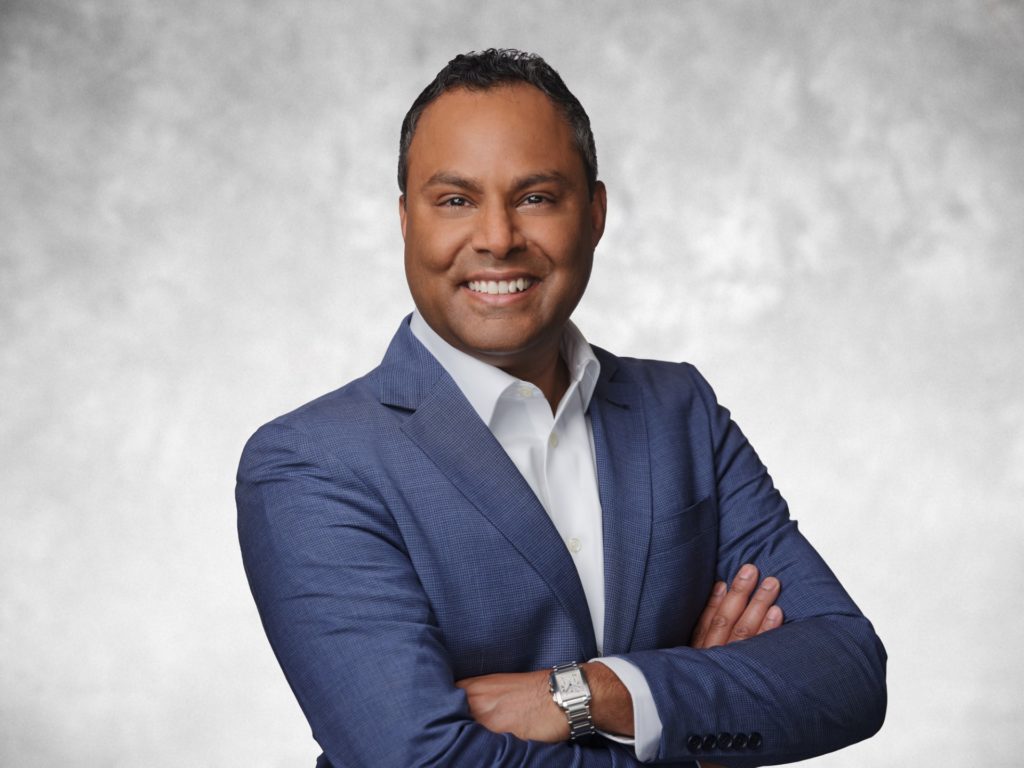
Jiten Sood, ’99, credits alumni mentorship at NIU for shaping his path and remains committed to helping students find their defining moments. (Photo: Newcastle Investors)
Jiten Sood, senior vice president of finance at Newcastle Investors, vividly recalls a career-defining moment at NIU — one that reveals how preparation, access and the right people can chart a student’s trajectory.
While walking the floor of the Department of Accountancy’s internship fair, Sood was stopped by Lance Smith, ’84. Smith was recruiting for Ernst & Young’s real estate division.
“Hi, young man,” Smith said. “Have you ever thought about a career in real estate?”
Sood, an accountancy major, laughed and replied, “No, sir. I have not.”
Smith then smiled and simply explained why he should.
That brief exchange didn’t just lead Sood to a summer internship at EY — it also set the direction of his professional life.
“This happened 27 years ago, and I remember it like it was yesterday,” Sood said. “That pivotal connection where Lance’s insight into the scale and long-term growth potential of the commercial real estate industry was the catalyst I needed to solidify my professional focus.”
For Smith, the interaction affirmed why he returned to campus to recruit and connect with students.
“NIU students have a vast network of alumni resources,” Smith said. “Alumni can be valuable mentors and advocates. Sometimes all it takes is a conversation — someone taking a moment to show a student what’s possible and encourage them to take that step.”
Looking back, Sood sees that moment as more than coincidence. It resulted from campus leadership experiences that built his confidence, coursework that prepared him to walk into the fair, an alumnus eager to invest in developing the next generation, and NIU’s strong industry partnerships connecting students with real-world experience.
Mentorship in Practice
The internship was more than résumé boosting. It was an education in what intentional mentorship looks like. Smith was on site daily and took a real interest in the interns’ development. One week, he assigned a technical research project and asked each intern to formally present their findings. This was not to test them, but to stretch them.
“He took an interest in our development and wanted us to grow,” Sood said.
When summer was over, Sood was grateful.
“I had an internship with Discover Card’s Novus Services the prior summer through the INROADS organization,” he said. “It was a great experience, but working with someone like Lance the following summer and having the chance to prove myself within EY changed everything. Not everyone gets that opportunity. I don’t take it for granted.”
Sood walked away recognizing the valuable role alumni can play in opening doors for students and shaping their futures. He was offered a full-time job at EY before graduating, where he worked as a senior audit associate in their real estate practice for almost five years. From there, he served as a senior financial analyst at Walton Street Capital, director of finance at Apriori Solutions, and chief financial officer at The Airoom Companies. Sood later returned to commercial real estate at Senior Lifestyle as vice president of accounting. In 2021, he joined Newcastle Investors as controller and rose to his current role as senior vice president of finance.
Wanting to provide NIU students with the kind of opportunity once extended to him, Sood advocated for and secured approval to hire an NIU intern during his time at Senior Lifestyle. The experience was meaningful for both and the intern later secured full-time employment. This reinforced Sood’s belief in the long-term value of strong internships and intentional mentorship. He continues to champion pathways connecting prepared students with practical experience.
“When NIU asks, I don’t hesitate,” he said. “I’ve judged pitch competitions and helped students prepare for them. Most recently, I connected with students at a Friends of Entrepreneurship event.”
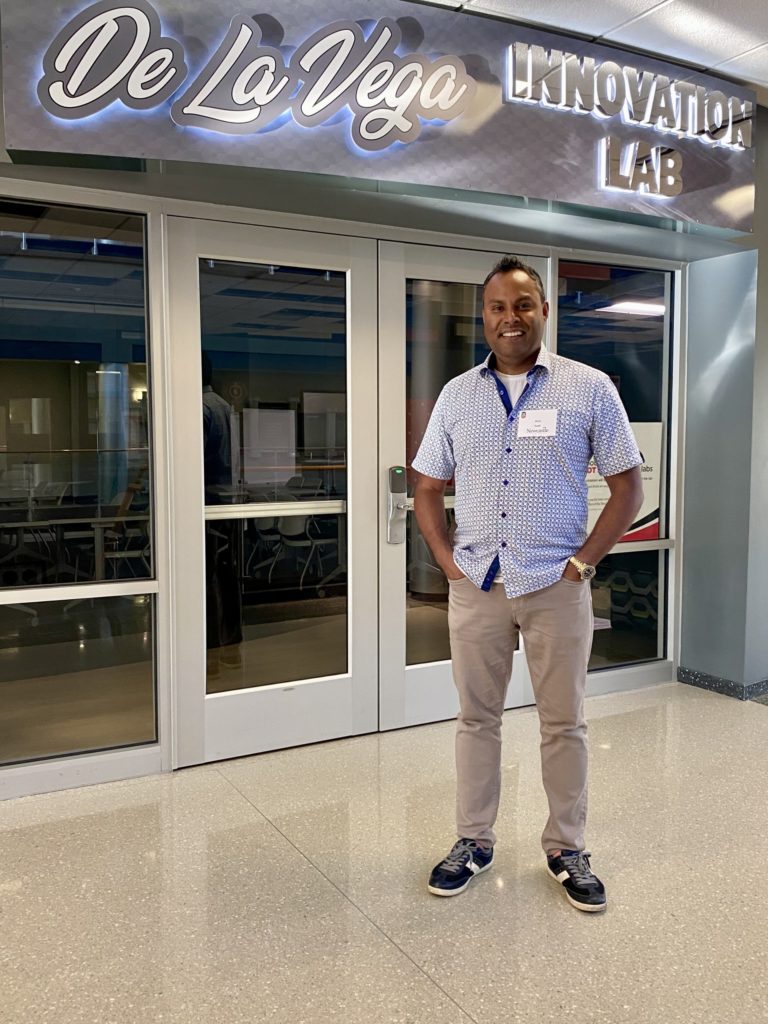
Jiten Sood poses at the door of the De La Vega Innovation Lab in the College of Business. (Photo: Rachel Schmit)
A Foundational Family Story
Sood grew up in Downers Grove, the youngest of three siblings in a household that valued education. His oldest sister, Serena, followed their father, a retired engineer, into engineering. His middle sister, Neeta, aligned with their mother, a dietitian, becoming an occupational therapist. Sood, however, gravitated toward business.
Long before Sood ever applied to NIU, the university had already become part of his family story — one often told by his mother, Suman Sood, ’74.
A first-generation immigrant, Suman pursued her master’s degree at NIU while pregnant with Serena, commuting to DeKalb for evening classes. It was a story she returned to frequently, not as a hardship, but as a point of pride — a reminder of what perserverence and opportunity could make possible.
“She told me the story of being pregnant and driving to NIU to earn her degree often,” Sood said. “What really stuck with me was how much that degree meant to her and the sacrifices she made to earn it.”
From his mother’s story, Sood understood that education was something you worked for — and something worth working for. A strong education is a core principle Sood and his wife, Sonam, a dentist, instill in their two young daughters, Nyssa and Nayah.
When it came time to choose a university, NIU stood out for the College of Business’s reputation, particularly in accountancy.
Education Beyond the Numbers
Before debits and credits entered the picture at NIU, Sood heard the phrase, ‘accounting is the language of business.’ That saying resonated with him. He decided to pursue a major in accountancy and a minor in communications.
“Business and accounting allow you to understand the numbers, but you also have to be able to articulate those numbers into a story,” he said. “Not every accountant can communicate those numbers to non-accountants. It’s a compelling skill set to have, and those who do it well build trust.”
While a student, Sood actively sought leadership opportunities. He was keenly aware that future employers valued these experiences. His most impactful role was two years as a resident advisor in Lincoln Hall, where he gained hands-on leadership experience while earning room and board.
“Room and board weren’t just a benefit,” Sood said. “It was a job. You were responsible for the safety and well-being of residents.”
Between his RA role and paid internships, Sood’s education cost less than his siblings’. He recognizes the College of Business and the Department of Accountancy for expanding access through a strong internship pipeline and employer recruiting network.
In 2009, Sood earned his M.B.A. from Loyola University Chicago, where he strengthened his pledge to ethical leadership.
“It is important how you carry yourself,” he said. “Your reputation and integrity matter, and are both a focal point of my career.”
Professional and Philanthropic Passions
Sood has spent more than four years at Newcastle Investors and has overseen enhancements to the firm’s treasury function, institutional compliance program, internal and external reporting function, and revamped workflows to improve loss prevention and streamline operational efficiency. He remains steadfast in his commitment to prioritizing staff development, viewing it not as a task, but as a critical investment in the team’s collective potential.
Beyond his professional responsibilities, Sood holds a personal interest in hospitality real estate. He is an active investor in limited liability companies that own and operate hotels throughout the Midwest, bringing an accounting and auditor’s perspective to those ventures.
Sood believes young people benefit from perspective early on, so he looked for ways to help others and share his experiences early in his career. While earning his M.B.A., he got involved with Big Brothers Big Sisters of America. Although his ‘little brother’ no longer needs formal mentorship, they remain close friends.
“I remember being that nervous kid,” he said. “I want to help youth feel comfortable having conversations with adults and professionals they might otherwise find intimidating.”
It’s that focus on readiness — on helping students recognize their own abilities — that continues to draw Sood back to NIU and guides how he hopes to create opportunity wherever he can.
Learn how you can help extend opportunities like those that shaped Sood’s journey at niuforward.com.
Lucy Slivinski, ’80, has been a working artist for decades, yet she still carries with her the lessons she learned as an arts student at NIU.
They are: be an individual, focus on your journey and stay committed.
Those principles have guided Slivinski throughout her career as a sculptor and installation artist. An installation artist typically designs immersive, site-specific artworks that transform spaces and engage viewers in interactive, multi-sensory experiences.
“I have been very independent throughout my career promoting and selling my work; I also have a couple of galleries that represent me,” she said. “It is always challenging but extremely rewarding to live this life of an artist! Art is my life, and I feel very blessed to be able to get up every day and go into the studio!”
For the past 30 years, Slivinski has primarily worked with recycled materials, creating both large-scale installations and more intimate gallery pieces.
“I have many public art commissions throughout the city and abroad,” she said. “I also create one-of-a-kind light sculptures that are often used in functional settings.”
Her public works can be found throughout the Chicagoland area, including the Uptown neighborhood, Grant Park, Logan Square Skate Park, the North Shore Sculpture Park in Skokie, and the Hidden Oaks Nature Center in Bolingbrook.
Slivinski grew up in Berwyn, a western suburb of Chicago, with two teachers as parents — her father eventually became a grade school principal, and her mother worked as a librarian. She recalls being drawn to art from a very young age.
“My parents saw my inherent talent and encouraged me,” she said.
She was particularly interested in NIU because of its strong arts department, especially its fiber art program. Fiber art, broadly speaking, is a form of fine art created with natural or synthetic fibers and materials such as fabric or yarn. She was able to attend NIU for four years thanks to a talented student scholarship from the arts department.
Slivinski credits several NIU mentors with shaping her artistic development.
“Dr. Mahboob Shahzaman was a mentor in weaving,” she said. “At the time, I was very interested in weaving tapestry. She helped me gain confidence in myself and my work. Renie Adams was another fiber instructor who taught me many techniques outside weaving on a loom. David Bower was my drawing teacher, and we remain friends today.
“All of these professors maintained their own art practices, and that encouraged me.”
During her time on campus, Slivinski spent countless days and nights in the Art Building. She also enjoyed attending concerts and performances and even sang with the touring choir for a year.
In addition to her NIU art degree, Slivinski later earned an M.F.A. in fiber from the Cranbrook Academy of Art in Bloomfield Hills, Michigan.
Today, Slivinski encourages NIU art students to embrace the same spirit of exploration and individuality that guided her.
“This is digging deep inside you to find what you want to express,” she said. “It takes time, and it takes a lot of work.”
This is just one example of how NIU prepares students to find their creative voice. Discover how NIU is fortifying our future at niuforward.com.
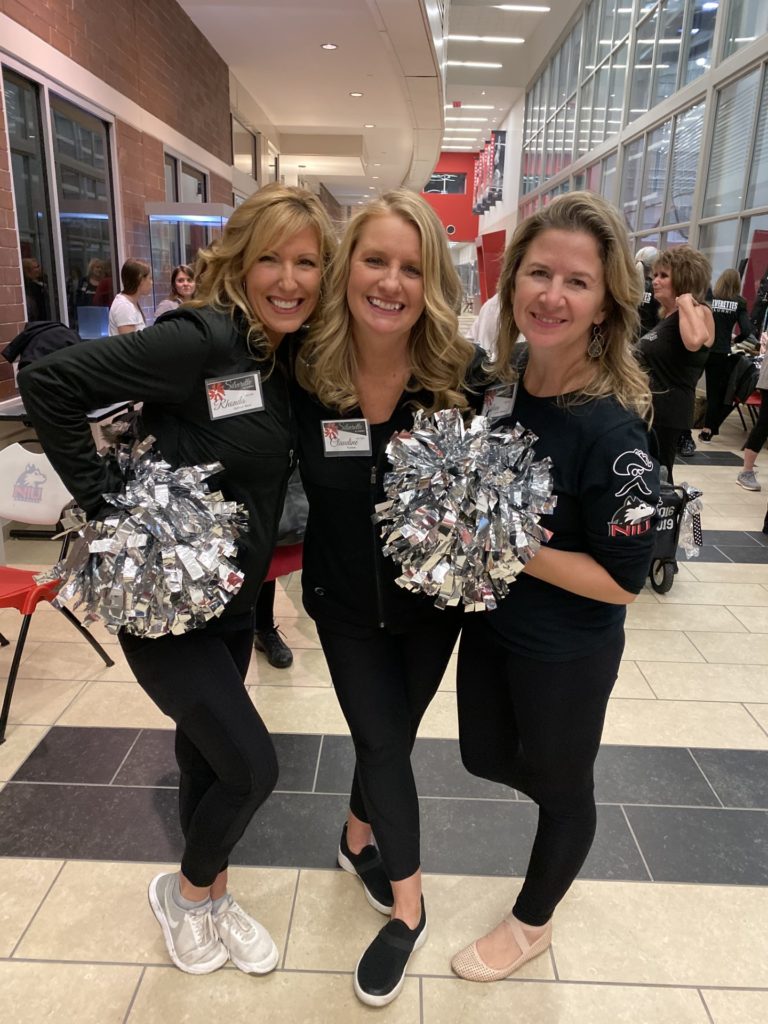
Claudine Trudeau (center) reunites with Silverettes Rhonda Benn (left) and Eileen Nelson (right). (Photo: Claudine Trudeau)
As an NIU Silverette, Claudine Trudeau, ’92, learned what it meant to commit fully to a team — and to herself.
Being part of the Silverettes remains the highlight of Trudeau’s college experience, but earning her place on the team didn’t come easily.
“I tried out my freshman year and didn’t make it,” she said. “I was devastated.”
Although she had participated in the poms team at Kaneland High School, Trudeau had no formal dance training. Rather than give up, she enrolled in dance classes at NIU to build her skills and confidence. That preparation paid off. She tried out again as a sophomore, making the team that year and her remaining years at NIU.
“Being on the team taught me discipline, time management and social skills,” Trudeau said. “I was very shy before college, and it pushed me out of my comfort zone. It also kept me physically active.”
Her Silverette memories include unforgettable moments performing on the field, marching in parades and traveling to away games, as well as performing at a Bears-Packers game at Lambeau Field — experiences she still credits with shaping her sense of teamwork and pride.
Trudeau majored in physical education with an emphasis in fitness leadership, now known as kinesiology. Her path to graduation, however, required perseverance beyond the practice field.
“The second semester of my sophomore year, my GPA wasn’t high enough to stay at NIU,” she said. “Instead of letting that situation drag me down and give up, I went to the local community college and earned my associate’s degree with honors. I reapplied to NIU, was accepted, and completed my bachelor’s degree.”
This determination — to learn from setbacks and keep moving forward — has guided both her personal and professional life.
“Don’t be afraid to make mistakes or fail,” Trudeau said. “Take risks, and if something doesn’t turn out as expected, keep trying or move in a different direction. Everything is a learning opportunity.”
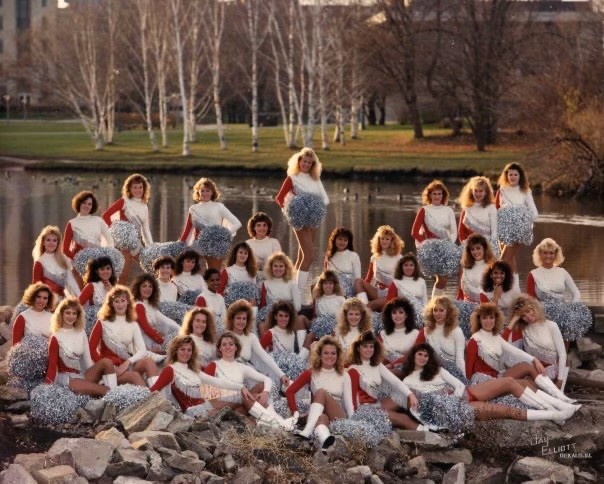
Claudine Trudeau (seated, back row, 4th from the right) poses at the lagoon with the Silverettes. (Photo: Jay Elliott)
Building a Career Through Grit and Leadership
Trudeau carried that mindset into a successful career in talent acquisition across industries ranging from software and engineering to publishing, finance, hospitality and healthcare. She is a Certified Healthcare Recruiter, a credential recognizing expertise and leadership in healthcare recruiting and HR practices.
Today, she serves as assistant vice president of talent acquisition for Vi, the parent organization of luxury continuing care retirement communities nationwide. In this newly created role, she built Vi’s talent acquisition function from the ground up, overseeing recruitment strategy, employment branding, systems, metrics and candidate experience.
Prior to Vi, Trudeau spent more than a decade as director of talent acquisition at Houghton Mifflin Harcourt, where she led a global recruiting team supporting one of the world’s largest education technology companies. Earlier in her career, she held leadership roles at Divine Interventures, Packer Engineering and ABN AMRO/LaSalle Bank.
Her professional journey began at Platinum Technology, a global software company, where she was hired as an administrative assistant to the CFO. Within four years, she progressed through multiple promotions — from recruiter to recruiting manager to director of recruiting — leading a team and helping support a rapidly growing, multi‑platform software organization. Platinum Technology was later acquired by Computer Associates.
Along the way, Trudeau faced layoffs and professional rejection, experiences she now views as pivotal turning points.
“I believe some changes were meant to be and led me to better opportunities I wouldn’t have pursued otherwise,” she said. “I’m very determined, and I persevere no matter the circumstances.”
At Vi, she continues to draw on lessons learned as a Silverette — bringing people together, understanding motivation and building teams that shape culture and community.
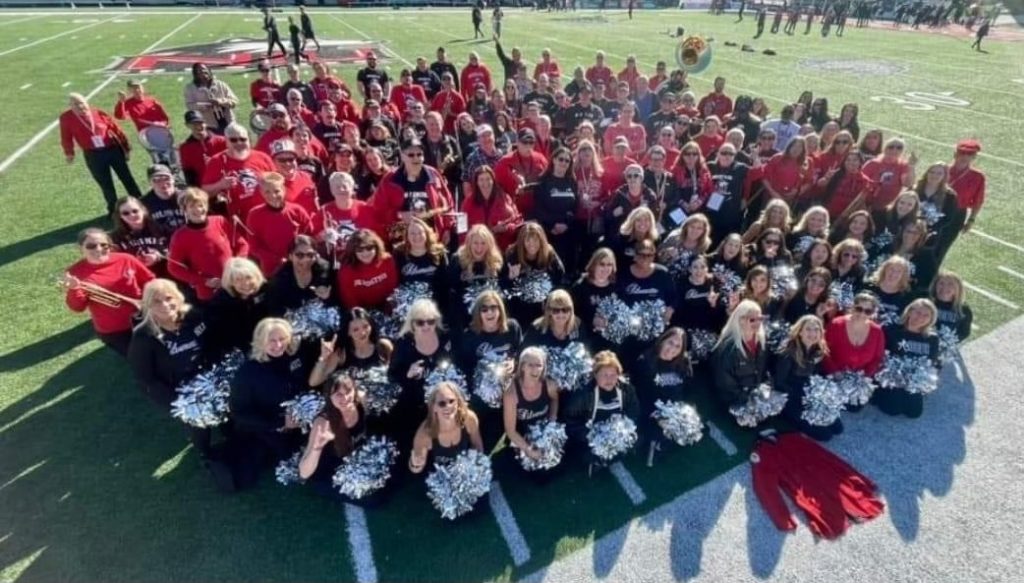
Claudine Trudeau (4th row, 6th from the left) poses with NIU Huskie Marching Band Alumni during homecoming, reuniting Silverettes from across generations. (Photo: Member, NIU Huskie Marching Band)
“I want to keep my Huskie spirit and connections alive,” she said. “Performing pregame and at halftime with current band members is incredibly special. Reuniting with former Silverettes, meeting alumni from different eras and getting to know the current team is a blast.”
She encourages former band members, color guard members and Silverettes to join fellow alumni and experience Homecoming from the field once again.
“Dr. Bough, the longtime director of bands, and Silverette Coach Lisa Morreale have been so welcoming and supportive,” Trudeau said. “The excitement, laughter and thrill of stepping onto the field together make the weekend unforgettable.”
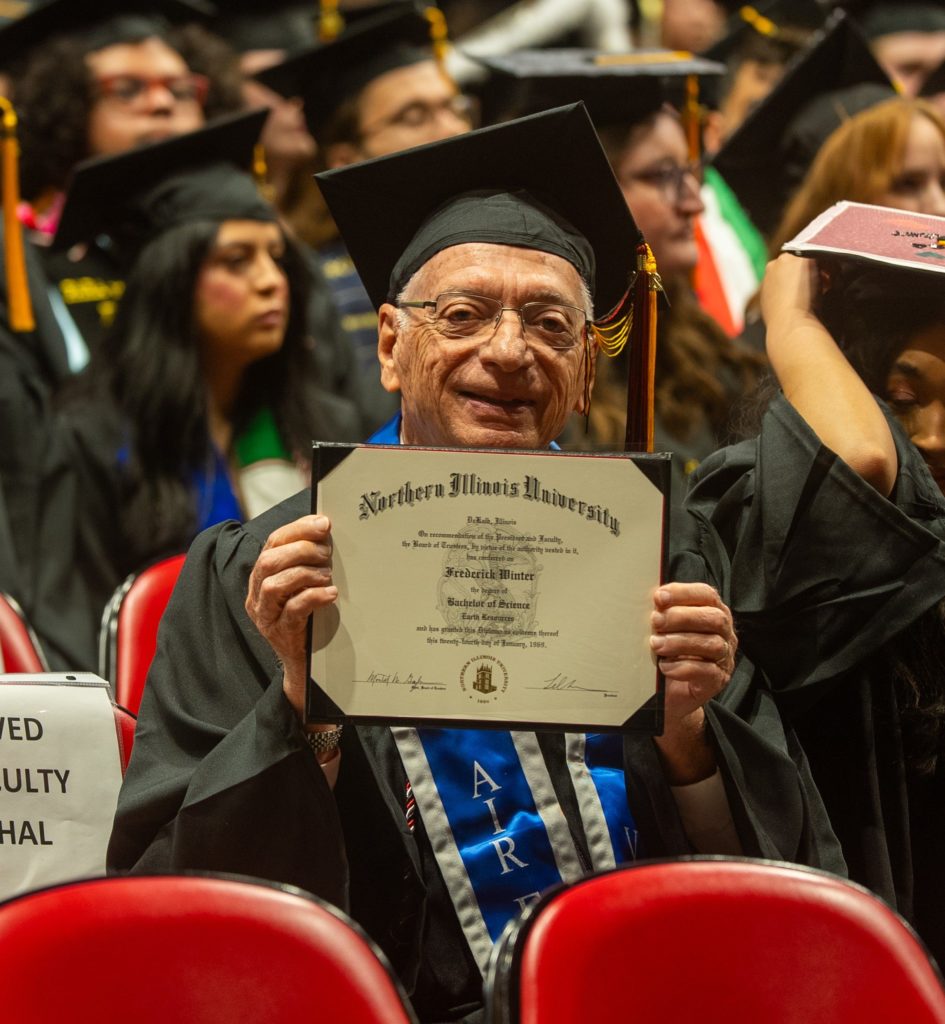
Fred Winter, ’69, holding his Bachelor of Science degree in earth resources during the 2026 College of Liberal Arts and Sciences commencement ceremony at the NIU Convocation Center on May 9, 2026.
When the NIU graduating class crossed the commencement stage in June 1969, Fred Winter should have been among them. Instead, he was in Texas, training with the U.S. Air Force.
This past weekend, 57 years later, Winter, ’69, finally walked across the commencement stage alongside fellow Huskie alumni.
“It had always been something I wanted to do, but between a job, raising a family, and some health issues the idea got pushed aside,” Winter said. “I decided this is the time to ask, and I was told yes, you can attend. I know my parents would have been proud of me for doing this and, with the support of my wife and family, I hope I can make them proud also.”
Winter grew up in suburban Maywood and graduated from Proviso East High School. Coming from a working-class family — his father a Firestone tire salesman and his mother a secretary for Canada Dry — he became the first in his family to attend and graduate from college. His parents helped with tuition, but the rest was up to him.
“Every summer and at breaks from classes for four years I worked in the warehouse at the Canada Dry plant,” he said.
It took him a couple of years at NIU to find his direction.
“I didn’t think I would make a good teacher or a businessman, so I leaned toward a liberal arts and sciences degree,” he said. “I subsequently found an interest in earth sciences and made that my major with a minor in biological sciences.”
Several professors shaped his path, including Aubrey Steven Messenger, George P. Stevens, Buddy Ross Guest and Ruben L. Parson.
“I have vivid memories of a soils class from Dr. Messenger,” he said. “We took a field trip in the fall to a very cold Fargo, North Dakota. It’s not every day you get to dig into the ground and get soil samples, but I enjoyed doing it.”
He also recalled how Dr. Stevens’ cartography class proved useful in his career, but it was Dr. Guest’s aerial photography and mapping course that changed everything.
“It directly led me to my profession working in public service,” he said. “I still have the textbook with my notes.”
Parson, though tough, had the greatest influence.
“He was my mentor and convinced me to pursue my major, but he was stubborn and very set in his ways,” Winter said. He still remembers challenging a test question he believed he answered correctly. “It didn’t make any difference — he said, ‘you got it wrong and that’s it.’ I still think I was right.”
During his time at NIU, Winter was inducted into Gamma Theta Upsilon, spent countless hours studying in Swen Parson Hall, and played intramural sports.
In the summer of 1967, while on vacation, he met Katherine Jean Kaufman, nicknamed Kit, at a dude ranch in Colorado.
“We did not get along at first — she thought I was stuck up — but after a while we started clicking, and in early 1968 I persuaded her to move to DeKalb,” he said.
Kit worked at the Wurlitzer Piano factory, and the couple enjoyed NIU football games, concerts and campus life. Their relationship deepened after Kit suddenly needed an emergency appendectomy.
“She was a thousand miles from home with few friends, and I was a college student trying to graduate,” he said. “It was the kind of situation that really brought us together, and in late April 1969 we were married. So, while it seemed to be a whirlwind romance, our marriage has lasted an amazing 57 years.”
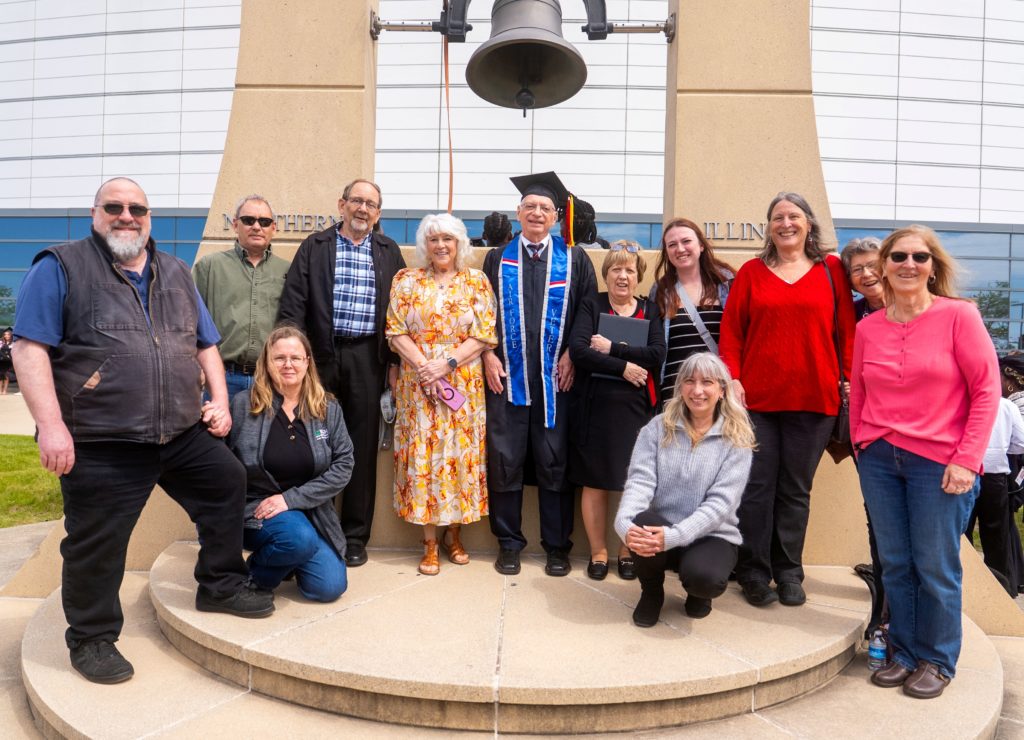
Fred Winter, ’69, center, with his wife, Katherine, or Kit, to his left holding his degree, and his family who joined him for the 2026 CLAS commencement ceremony at the NIU Convocation Center on May 9, 2026.
By the end of his senior year, Winter found himself one credit short and had to return for the fall of 1968. He was disappointed but finished his coursework and received his degree in the mail in January 1969.
Around the same time, his draft notice for the Vietnam War arrived.
Winter chose to enlist in the U.S. Air Force, an option available to those who had been drafted, and his NIU education immediately proved valuable.
“When the recruiter said they had a need for photo interpreters, I thought this was a perfect fit as I had taken that aerial photography course,” he said. “This is the reason that my education at NIU played such an important role in my life.”
After basic and technical training, he was assigned to the 544th Aerospace Reconnaissance Technical Wing at Offutt Air Force Base in Nebraska. As a non-commissioned officer, he spent four years providing highly classified targeting information to military commanders and war planners.
While stationed at Offutt, he and Kit welcomed two children: their daughter Michelle and son Doug.
After reaching the rank of staff sergeant, Winter left the military to pursue similar work in the civilian sector. He joined the Defense Intelligence Agency in Washington, D.C., as a photo interpreter and later retired in 2015 from the National Geospatial-Intelligence Agency. During his career, Winter briefed high-ranking military officers and presented intelligence-related briefings at foreign and domestic military conferences.
“During my civilian career I received a number of awards, but my most cherished award was the Meritorious Civilian Service Medal,” he said. “At one point our team made an important discovery that went all the way up to the office of President Obama where it was briefed as part of the President’s Daily Brief.”
He explained, “The most interesting event in my career was when I was asked to provide imagery related evidence concerning the violation of an export agreement between the U.S. and a foreign country. The violation was reported in major newspapers and the foreign country was fined.”
Looking back, Winter credits NIU for laying the foundation for everything that followed.
“If you asked me what being a graduate from NIU meant to me I would say quite a bit,” he said. “Being a student at NIU was a source of pride. I never intended to go there just to get a degree; I wanted my education to be the stepping stone to my future endeavors — and it was.”
For more information on supporting NIU students and programs, visit niuforward.com.
Feedback Form
Please provide feedback here or report any errors.