For Mindy Kinnaman, student engagement isn’t just a talking point — it’s a life-changing truth. It shaped her college experience, launched her career in higher education, and now drives her commitment to give back as an NIU alumna volunteer.
Since graduating from NIU with her doctorate in education in 2021, Kinnaman has stayed connected to NIU through volunteer work that helps current Huskies thrive. She evaluates scholarship applications, writes finals-week postcards, participates in interviews, and reviews graduate students’ resumes.
“Student involvement changed my life,” she said. “Volunteering lets me help students create those same life-changing experiences.”
Her passion for engagement began during her undergraduate years at Missouri Western State University, where involvement in student housing introduced her to student affairs — a career path she hadn’t even known existed. That discovery shaped everything that followed: nearly two decades in higher education, roles in student life and conduct, and now a leadership position focused on equity and compliance.
Today, as associate director/senior deputy Title IX coordinator at Southern Illinois University Edwardsville, Kinnaman investigates allegations of discriminatory harassment, including sexual misconduct, and ensures fair hiring practices across the institution. She also prepares compliance reports for state and federal agencies and contributes data for institutional and grant reporting.
Through it all, accountability has been her guiding principle.
“Leaders respect someone who owns their mistakes,” she said. “If something goes wrong, communicate quickly, correct it thoroughly, and always bring your best self.”
That mindset carried her through NIU’s Community College Leadership doctoral program. Drawn by its rigor and faculty expertise, Kinnaman embraced opportunities beyond the virtual classroom — forming close bonds with her cohort, attending annual in-person sessions in Naperville, and even studying abroad in Mexico.
“It was incredible,” she said. “I learned about higher education globally and how to build transformative experiences for students.”
Her biggest hurdle came during COVID-19, when her dissertation plans unraveled. Focused initially on student-led active learning, she pivoted to studying faculty implementation instead.
“I didn’t want to delay graduation,” she said. “So I pivoted and successfully defended in December 2020.”
Her message to fellow alumni is simple: Get involved.
“It doesn’t matter where you live or what you do — there are ways to make an impact,” Kinnaman said. “It’s rewarding to know your efforts help students succeed. Even small contributions, like reviewing scholarships, can make a big difference.”
NIU alumni volunteer their time in meaningful ways. Want to brainstorm ways you can get involved? Contact Liz McKee, M.S.Ed. ’14, at lmckee1@niu.edu.
Barry Franklin, ’81, had financial help to attend NIU and he and his wife, Debbie, are now happily giving back to his alma mater after he’s built a career as an actuary.
The Franklins have supported students in a variety of ways, including establishing their own Barry and Debbie Franklin Student Engagement Fund. Establishing the fund was suggested by Christopher McCord, associate dean for academic administration and professor in the Department of Mathematical Sciences.
“When Debbie and I decided to endow a scholarship fund, Dr. McCord suggested the engagement fund as a means to enable students to gain experiences beyond basic education that might otherwise be unattainable,” Franklin said. “This includes such things as attendance at industry conferences, purchasing data and materials for research projects, and so on. I have certainly benefited from those types of experiences in my career and want others to have the same opportunities.”
Franklin applied for and was awarded the NIU University Scholar Award and the NIU Alumni Association Scholarship, which he said made the decision to attend NIU easy. Receiving that scholarshiop inspired him to give back.
“The University Scholar Award enabled me to attend NIU without having to take out loans and also required me to develop and maintain the discipline needed to maintain my grades,” he said. “I felt very fortunate to have been awarded that scholarship and wanted to ensure others had similar opportunities.”
Franklin grew up in Palos Heights, Illinois, with three siblings – two older brothers and a younger sister. His sister Patty had Down syndrome and died from related complications in her mid-30s, something that impacted him greatly.
“Having Patty in our family was truly a gift, and taught me a lot about patience and empathy, and the value and importance of every individual,” Franklin said.
Franklin’s high school orchestra and jazz band conductor was an NIU alumnus and always spoke highly of NIU’s music program. While a junior in high school, Franklin visited NIU with other high school musicians to attend music workshops and see a performance of the NIU Jazz Ensemble.
“While I didn’t intend to major in music in college, I enjoyed the campus visit and had a good impression of the school,” he said.
“NIU fit the bill quite nicely for someone who didn’t have a family college tradition to uphold or certain idealized expectations of a college experience,” he said. “I think NIU still fulfills that first-generation role.”
When Franklin arrived on the NIU campus, he dove in and took full advantage of the student experience.
“A lot of my friends from high school who attended NIU chose to live off campus after their freshman year, but I really enjoyed my dorm experience and stayed in Lincoln Hall until my last semester, when I moved to a rental house just to have the off-campus experience,” he said. “I participated in intramural sports, was elected to the Student Association Senate and served on the NIU Speakers Committee, becoming chairperson my senior year. I also worked as an undergraduate teaching assistant for the mathematics department and tutored several students.”
Franklin describes himself as self-sufficient and independent, and NIU allowed him as a student to maintain that independence.
“I selected my classes without much, if any, guidance from the university or my family and found all I needed in the course catalogue to ensure I took the classes I needed to graduate with my chosen degree, a Bachelor of Science in probability and statistics, with a minor in economics,” he said. “I also found elective courses that supported my actuarial career goal, in accounting, finance, computer sciences and so forth. I also took early morning classes just about every semester, reinforcing the need to get up and get going every day.”
Franklin recalled that school had come easily to him and that he took that for granted. He knew he needed to maintain a 3.3 cumulative GPA to keep his scholarships and there was a point where he said he had to buckle down to build his GPA back up so one bad grade wouldn’t cost him the scholarships.
“That served me well, because I learned how to study technical subjects on my own instead of relying solely on classroom learning,” he said. “It turns out I needed to have that discipline in order to complete the actuarial exams after graduating, and I did graduate from NIU with exactly a 3.3 GPA.”
Franklin spent his entire career in the actuarial field, beginning as a trainee at Allstate Insurance in Northbrook shortly after graduation and continuing in the field until his retirement in 2023. He completed his exams and became a fellow of the Casualty Actuarial Society in 1993 and has been an active volunteer with the organization since then. He was recently selected president of the organization.
“Being nominated and elected by the 11,500-plus members of the CAS is the culmination of over 30 years of volunteering for the organization, including previous roles on the Executive Council and the Board of Directors, and is both gratifying and humbling,” he said.
Some of Franklin’s career highlights include earning his first managerial role, completing his CAS designations, and taking his first consulting role in a different part of the country, which required him to move his family to Atlanta.
“All presented tremendous personal and professional growth opportunities,” he said.
Franklin said he was able to continue his success with Debbie’s support.
“I have had a number of mentors over the span of my career who both encouraged and challenged me, but I would not have been nearly as successful without the support of my wife,” he said. “Completing the CAS exams is a grueling process and places demands on family, with a lot of early mornings, late evenings and weekends spent studying. Moving our family to Atlanta, and later back to Chicago, was certainly disruptive to Debbie’s life and those of our four children, but they all made the best of things and experienced a lot of personal growth themselves.”
It is important to Franklin to stay involved and keep learning.
“One of the biggest lessons in my professional career is that completing your education, whether undergraduate, post-graduate or professional certification, is just the beginning of your learning, and technical skills are just table stakes,” he said. “Soft skills are essential for success, and in many ways are harder to develop and hone, because each of us is wired differently and authenticity is important, so you really can’t fake it.”
Franklin encourages other alumni to give back to NIU, even if it isn’t a large amount.
“I began donating regularly to the NIU Foundation not long after graduation, but my donations were rather modest – we had children relatively early and money was a bit tight,” he said. “We support other causes as well, which I suppose we all do if financially able, but we have been blessed in many ways and felt this was an opportunity to pay it forward by repaying the gift I had received as a young adult.”
He added, “It is a privilege to be able to give in this way and I encourage others to consider how they might also pay it forward.”
For more information on being a philanthropic Huskie, click here!
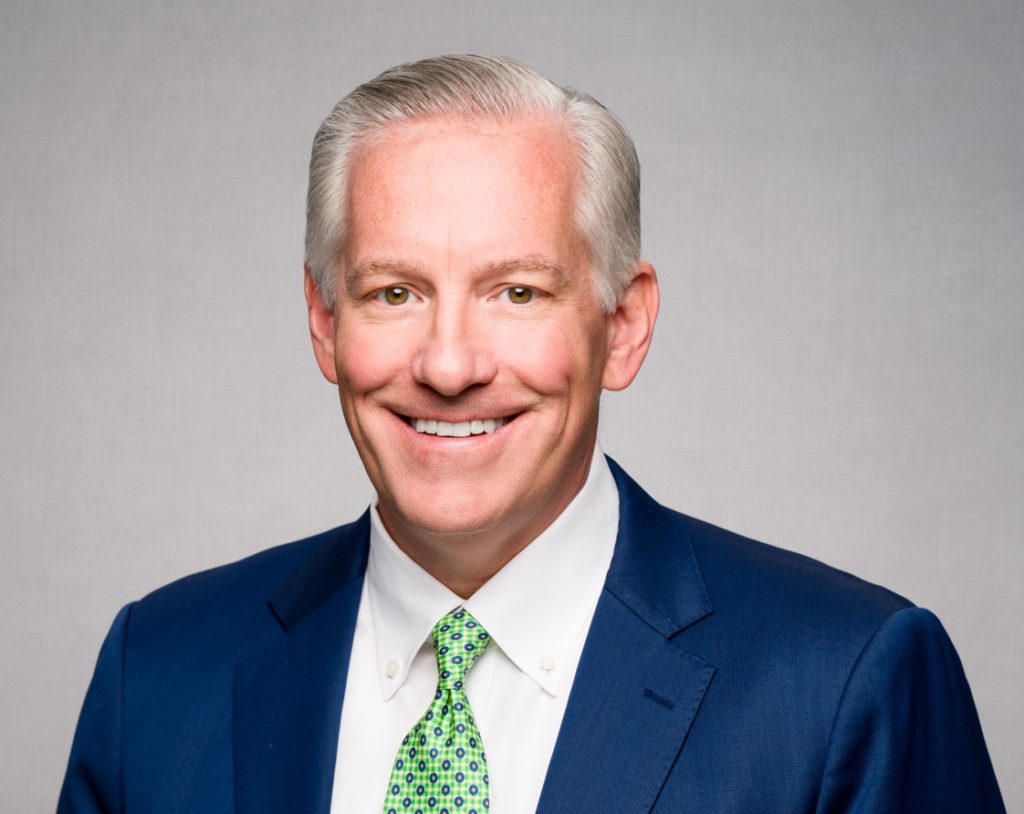
From innovative building materials to wires and cables, nutritional supplements to water purification systems to sustainable farming, materials from J.M. Huber Corporation make everyday products better — with NIU alumnus Glenn Fish, ’89, leading the way.
Founded in 1883, Huber began as a single manufacturer of printing ink. Today, it is a sixth-generation, family-owned business and a global innovator in engineered materials, engineered woods and sustainable forestry, all guided by a long-term commitment to people, planet and performance.
Fish joined Huber as executive vice president and CFO in 2023 and became CEO in December 2025.
The Road to Manufacturing
Fish grew up in the south suburbs of Chicago doing what most kids his age were doing — school and sports — but what set him apart was tagging along with his father to help with plumbing and construction side jobs.
“Working with my father at a young age taught me about work ethic, commitment and integrity,” Fish said. “I learned that big goals could be achieved little by little over time and that personal and professional growth came through hard work, dedication and staying focused.”
Over 35 years, Fish advanced through finance and operations roles in global manufacturing, including senior leadership positions at Alcan Packaging and Tekni-Plex, where he drove growth through acquisitions. Before joining Huber, he helped build Vibrantz Technologies into a global leader in specialty chemicals.
Now, as CEO of J.M. Huber Corporation, Fish oversees businesses that impact everyday life and critical infrastructure, including minerals for construction and personal care, fire-retardant solutions for electrical infrastructure and vehicles, and specialty fertilizers and biostimulants for agriculture. Huber also produces engineered wood used in innovative building products, manages timberlands, and partners strategically — including a 2024 stake in Tate & Lyle PLC following the sale of its food-ingredient business, CP Kelco.
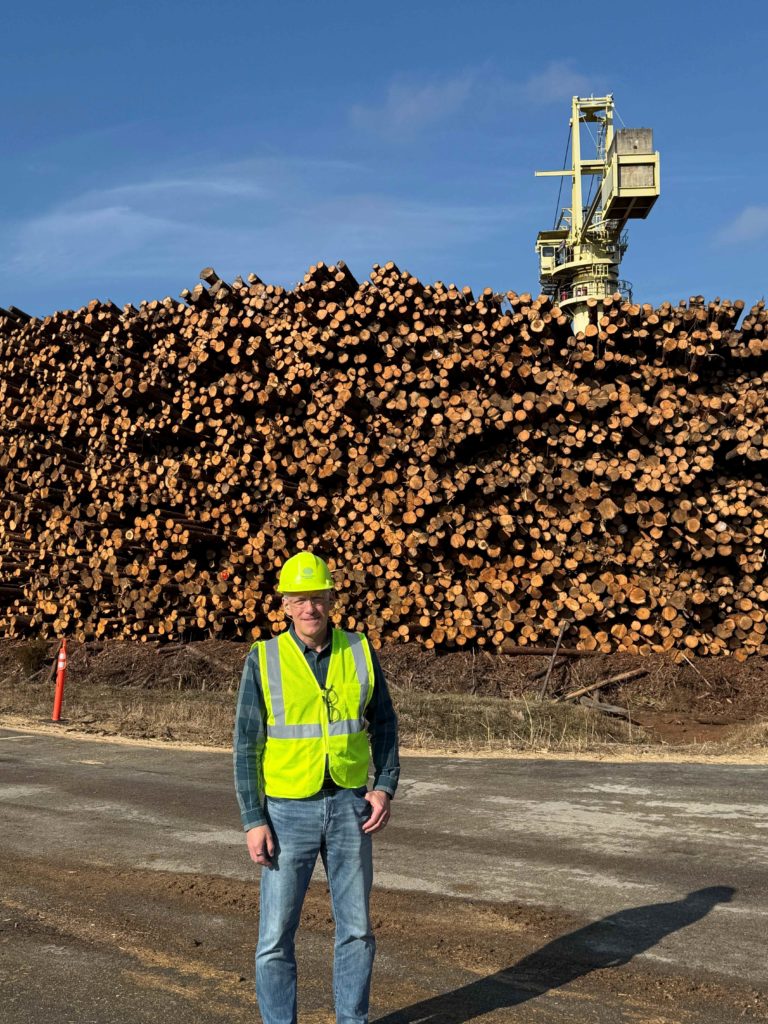
Glenn Fish visits a Huber Engineered Woods mill in Spring City, Tennessee. (Photo credit: Bryan Little)
Commitment Beyond the Bottom Line
Sustainability and innovation are at the core of Huber’s strategy, with each business working to reduce its environmental impact while helping customers do the same. Fish says this purpose-driven approach is one of the reasons he’s proud to lead Huber.
“It’s not just about performance — it’s about making a positive difference,” he said.
This commitment extends beyond products. Through Huber Helps, the company supports initiatives such as Habitat for Humanity and the Gary Sinise Foundation’s Restoring Independence, Supporting Empowerment (R.I.S.E.) program, to which Huber has made significant contributions to 50 of the R.I.S.E. homes built for severely wounded veterans in the U.S.
The Right School for Fish
Fish chose NIU for its accounting program and for its balance of academic quality and affordability.
“Close friends and family attended NIU, and I already had familiarity with the school,” he said. “NIU had a great business school and accounting program, and I had an interest in both. Funding a college education came with its challenges for me, as it does for many, and NIU was a much more affordable and the best option for me overall.”
While earning his bachelor’s degree in accountancy, he spent time competing on the NIU’s former Division I men’s swim team — a commitment that taught him time management, resilience and the value of teamwork. Fish created lifelong memories and strong friendships through swimming and campus life. He credits NIU for preparing him for the workforce and for equipping him with the tools to advance his career.
“Much more than book smarts, NIU helped me focus on the importance of developing strong working relationships, group problem solving and resolution, speaking and presenting and time management, among others,” he said. “Those skills gave me the foundation to succeed in every role I’ve held since.”
Today, Fish’s Huskie pride runs deep.
“I certainly have more than my fair share of Huskie pride, especially as a longtime fan of NIU football,” he said. “I have enjoyed cheering on the Huskies through the years.”
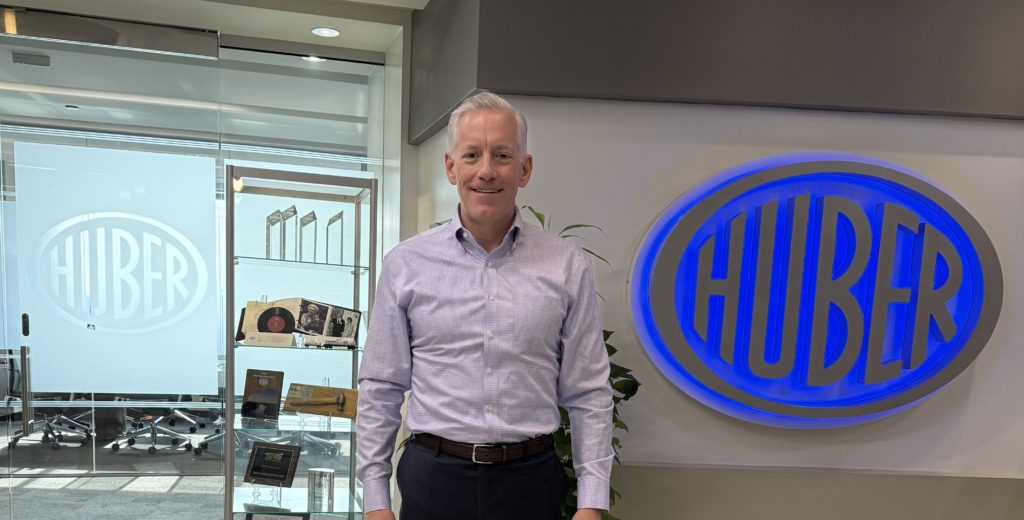
Glenn Fish credits his NIU accountancy degree for preparing him for leadership roles. (Photo Credit: Cheryl Holloway)
Words of Wisdom From the C-Suite
Fish is quick to credit others for his success.
“I’ve been blessed with a supportive spouse, Josephine, who is a great life partner, and we’ve grown in our journey together — in our faith, family and friendships,” he said. “I’ve also worked for and learned from some of the best leaders along the way and have had great teams working for and with me to drive success.”
He acknowledges that sacrifices and calculated risks played a role, but one experience stands out as transformative: being a special needs parent.
“My second youngest of five children, my son Carter, is non-verbal autistic with many other related neurological challenges,” Fish shared. “Seeing the obstacles he has overcome and how he doesn’t quit in the face of adversity motivates me even more personally. Being his father has blessed me with another degree of empathy, patience, discipline, grit and much more that comes with this life experience.”
Fish emphasizes curiosity and adaptability, encouraging professionals to take on different roles, volunteer for high-impact projects and seek out great leaders to learn from. He advises being open to relocation to expand experiences, networks and earning potential.
“Focus on broadening your experiences and always learning more about your business outside of your designated function,” he said. “Be willing to give and take feedback and work to improve from it.”
Success, Fish believes, is as much about mindset as it is about skill. He believes the way you think shapes the way you act — and ultimately, the results you achieve. As he puts it, quoting Henry Ford: “Whether you think you can or think you can’t, you’re right.”
Inspired by J.M. Huber Corporation’s sustainability mission? Learn how NIU is embedding sustainability into every corner of campus life at niuforward.com.
For years, Jim Perona, ’08, has used music to connect with audiences, whether at a private wedding or party gig, or for a corporate event. It’s something that he loves to do and has built a successful career on.
A serious medical diagnosis in 2022 didn’t slow him down; instead, it moved him to add a skill to his resume: keynote speaking.
“My most significant move into keynote work came directly from lived experience,” he said. “In 2022, I was diagnosed with multiple sclerosis, which forced me to rethink how I practiced, how I performed and how I defined success. Continuing to perform at a high level meant learning how to adapt, stay focused and work within real limitations on a daily basis.”
Multiple sclerosis, also known as MS, is an autoimmune disease in which a person’s own immune system attacks the protective sheath that surrounds nerve endings. The disease affects people differently, but generally causes numbness, weakness, difficulty walking, vision changes and other symptoms.
When he began sharing his journey dealing with his MS diagnosis, Perona saw how deeply it resonated with his audiences.
“That response is what led me to develop keynote concerts,” he said. “They are not just performances; they are shared experiences that give people practical, human takeaways they can apply right away in their own high-pressure environments.”
The “keynote concerts” incorporate live music and storytelling.
“The keynote concerts are experiences that help people perform under pressure, navigate change, and reconnect with what truly matters to them,” he said. “I have spent more than a decade building a full-time performance career, playing hundreds of events that range from weddings and corporate gatherings to concert halls and senior living communities.
“Along the way, I noticed something that forced me to adapt to the senior living community performances: People were not only moved by the music itself, but by the stories behind it and the moments of connection those stories created. While I didn’t realize it at the time, this became the first indication that public speaking might be in my future.”
Growing up in suburban Wheaton, Illinois, Perona was the youngest of six kids in a very musical home.
“Music was my first passion, and becoming a musician became my second passion,” he said. “I knew it wasn’t enough to just experience music as a listener – I needed to be on that stage, performing and making a positive impact on people’s lives.”
Perona initially wanted to learn to play the drums, but his brother Tony, ’97, gave him some advice.
“He said, ‘Jimmy, you should try the guitar first, because an unplugged electric guitar is so quiet that mom and dad will never hear you playing way past your bedtime,’” he said. “That was all the convincing I needed to pivot to the guitar.”
Perona ultimately earned a Bachelor of Music degree specializing in classical guitar performance from NIU. He also received an associate degree in music from the College of DuPage and, after graduating from NIU, earned a Master of Music degree with academic honors specializing in classical guitar performance from the New England Conservatory of Music.
When it came time to decide on where to attend college, Perona was accepted at other schools, but he wanted to attend NIU.
The fact that Tony was an alumnus was one reason, but another was that guitar virtuoso Fareed Haque was a professor at NIU at the time. Haque, who taught at NIU for nearly 30 years, retired from teaching in 2018.
“I was also accepted at Roosevelt and DePaul, but I felt the strongest connection with Fareed Haque,” Perona said.
Haque would become a mentor to Perona, teaching him not only about music but about the music business.
“Fareed Haque was my private classical guitar instructor, as well as the classical guitar ensemble director, transcription guru, and so much more,” he said. “One of the greatest things Fareed implemented in me and the rest of his students was going through the process of booking performances. This became a foundational exercise and without it, it would’ve taken me longer to gain momentum with my performance career.”
Perona also praised associate professor Ed Klonoski, his music theory teacher.
“The way he articulated high-level music theory concepts has stayed with me,” he said.
Perona was also a senior at NIU during the Feb. 14, 2008, mass shooting that occurred at Cole Hall. Perona remembers the Huskies who supported those who needed it most during a dark time.
“The overwhelming outpour of support, togetherness, and bravery among the staff is something I’ll never forget,” he said. “In what was obviously a horrific, terribly sad day, there were so many people who went out of their way to lift others up. To be of service. To try and make others laugh. Experiencing so much light in a dark time gave me a powerful sense of perspective that I carry with me.”
During his time at NIU, Perona also enjoyed attending football games – he recalled Garrett Wolfe “running rampant on opposing teams” – and played in a rock band that regularly played gigs at the House Café and Otto’s in downtown DeKalb.
“I made so many friends at NIU that remain close friends to this day,” he said. “I also spent way too much money at Vinny’s Pizza and Tom & Jerry’s. That $4.50 garlic beef wrap and fries special was dangerous, in the best possible way.”
Being a live performer comes with its share of challenges, but like any Huskie, Perona shows his perseverance as a professional.
“Especially since I do a lot of outdoor weddings throughout the year, there’s always unique weather challenges that can present themselves: rain, cold weather, overwhelmingly hot weather, which can be especially challenging with my multiple sclerosis,” he said. “Over time, I’ve learned to adjust to those situations as best I can, as my overall goal is always to put in the exceptional performance that the client deserves.”
The challenge with keynote concerts, he said, is standing out as a public speaker and offering a unique experience.
“My approach of mixing live music, storytelling, crowd engagement, and tangible and intangible takeaways has been a crucial factor in standing out, so that certainly helps,” he said.
The rewards, however, are incredibly rich.
“Since I mostly perform at private events, it’s deeply rewarding to be the soundtrack to a significant day in someone’s life,” he said. “Whether it’s a wedding, anniversary, funeral, celebration of life, retirement party, graduation party, and many more, it’s never lost on me that these are incredibly special, landmark days for the people holding the event. I do not take that lightly and remain committed to playing my heart out for every event I’m hired for. It’s what the client deserves.”
There’s a special reward to the keynote concerts.
“My MS story has helped so many others approach their own daily struggles with refined focus, optimism and determination,” he said. “To that end, it’s made what once felt like a constantly miserable, incurable autoimmune disease become something I’m building with. Keynote concerts have provided a silver lining, and I can now be of service to organizations, associations, seminars, conventions, leadership retreats, conventions and more.”
This is just one example of how NIU empowers students to become leaders who shape tomorrow’s world. Discover how NIU is fortifying our future at niuforward.com.
Behind every click, stream and swipe lies a vast network of data centers — the backbone of our daily lives.
“From 911 calls to banking, food production to aviation, medical to gas industries, the digital and physical systems that support modern living all pass through data centers,” said Stanley Schultz, ’04, director of data centers at Ware Malcomb.
Yet, for most people, the planning, design, and efficiency of these facilities rarely cross their minds. Demand, however, is accelerating. The rise of AI and large language models has intensified the need for capacity and hyperscale facilities, but data centers themselves have been around for a long time.
“The first data centers started in the 1940s and grew over the years from small rooms to large buildings as the internet exploded in the late 90s and early 2000s,” said Schultz. “Without knowing it, our personal preferences for the way we choose to live have required the need for continued growth.”
That growth requires solutions that balance speed, resiliency and sustainability without sacrificing scale. Today, Schultz brings this approach to every project. From small data centers to multi-building campus planning, he guides projects from concept to deployment.
“Data centers are a very utilitarian design typology,” Schultz said. “Good design strives for standardization and can accommodate future flexibility. It should always be modular. Thinking through assemblies big and small and how they will be made, deployed to sites, and maintained is critical.”
Juggling Pace, Power and Pushback
As society pushes data center design and deployment to innovate and keep pace, the greatest constraint and challenge is power.
“Every component of a data center, including servers, cooling, computing, and even basic building operations like flushing toilets, consumes electricity,” Schultz said. “The push will be towards finding ways to create and utilize power more efficiently.”
With rising concerns about the energy consumption and environmental impact of future data centers, Schultz says pushback can be productive.
“Without constraints, we have nothing to push against,” he said. “It will require the industry to be smarter about how we use and create resources. I’m hopeful that a solution we find for data centers will eventually be used to create efficiencies in other aspects of life.”
No Master Plan, Simply Curiosity
Data center design wasn’t the career Schultz originally imagined. He grew up mostly in Illinois, where Chicago’s ’90s punk scene and skateboarding developed his fascination with physical space and urban and suburban environments. College wasn’t part of the plan either, but his high school photography teacher pushed him to go.
“I chose NIU because that is where she went,” Schultz said. “She helped me fill out the application and sent it in. I owe her a lot. I wouldn’t be here without her. If you are reading this, thanks Ms. B!”
Schultz arrived at NIU without a master plan, but the environment allowed him to test interests, follow his curiosity, and grow. He joined the rugby team and connected with professors Ben Stone, Michael Barnes, and Valerie Wallace, who recognized his potential and helped him build the confidence to forge his own path. In 2004, he earned a Bachelor of Fine Arts in design.
“NIU gave me a place to explore, build confidence and make connections,” Schultz said. “Being somewhere to cultivate your sense of self is so important. NIU provided that at a part of my life that needed it the most.”
His road to data centers began with roles in industrial design, fabrication, and exhibit installation and production at Chicago’s Field Museum. After earning a Master of Architecture from the University of Illinois Chicago, Schultz spent a year abroad working for renowned Colombian architect Giancarlo Mazzanti before moving to New York to work for Jeanne Gang, architect of the Aqua Tower and St. Regis Chicago. Those formative years strengthened his problem-solving instincts and shaped how he approaches design at every scale.
Ultimately, these experiences converged in the specialized world of data center design at Sheehan Nagle Hartray Architects in Chicago.
“After working in traditional architecture, I was looking for a change. Something that tapped into the product skills I developed as an industrial designer and fabricator,” Schultz said. “Data center design offered that opportunity, and the process is more like product design than architecture.”
Schultz credits his success to curiosity and agility.
“Curiosity helps with exploration, fights stagnation and is great during conflict,” he said.
Schultz is among those influencing the way people live, work and connect. Data centers may be the backbone of our digital lives, but their evolution starts with individuals driving innovation — because progress demands both curiosity and courage.
Discover how bold ideas and fearless curiosity are shaping the future at NIUForward.com.
Born and raised in Joliet, Illinois, Mary Wirth, ’74, had been enthralled by science even as a child, growing up in the shadow of the space race.
“During my childhood, the space race captivated everyone, starting with Sputnik to the moon landing when I was 16,” she said. “Science was esteemed. My father loved science. He watched educational TV with us, and he had quite a good telescope for looking at the moon and planets. I always knew I wanted to be a scientist.”
However, Wirth remembers the obstacles she faced being a young woman wanting to go into science as a career.
“Science back then was viewed as a career only for boys, so it was not a simple path for me,” she said. “I tell my saga as an inspiration to anyone who is viewed as an outsider. I planned to go to the University of Illinois Urbana-Champaign, and I wrote to the head of the chemistry department and asked what courses he recommended for me to take in my senior year. My high school principal forbade me from taking both math four and physics, saying it was ‘inappropriate for a girl.’ I decided to skip my senior year and go to a junior college since I was just a few summer school classes away from a diploma.”
Wirth ultimately found allies at NIU.
“My junior college freshman chemistry instructor told me he had never given an A to a girl before and never would,” she said. “When I registered at NIU, they balked at letting me into the honors program with the Bs in freshman chemistry. The math department went to bat for me to plead my case to the chemistry department. The department head agreed to meet with me and then allowed me into the honors program. It was fortunate for me because I had wonderful classmates with a thirst for learning and puzzling out this strange subject called chemistry. When I graduated, the department head shook my hand and said he was glad that he had admitted me into the honors program.”
Wirth had a successful career in academia and scientific research before her retirement as a professor at Purdue, and when it came time to give back to her alma mater, she had a particular NIU mentor on her mind: Joe Vaughn.
“Dr. Vaughn was one of the good people, one of the very best,” she said. “I had Dr. Vaughn for inorganic chemistry in my senior year. He was a spectacular teacher. He made chemistry so interesting that I don’t think I missed a word of what he said. He melded material I found confusing from earlier courses, and he made sense out of it. I felt like his course was where I had gotten nearly my entire understanding of undergraduate chemistry.”
Wirth had the opportunity to thank Vaughn personally during a visit to NIU in September 2025, when she met with him and his wife, Jean, M.A. ’91, and told him about her establishing the first endowed professorship in the Department of Chemistry and Biochemistry in his honor, as part of a planned gift to NIU.
“Dr. Vaughn had a huge impact on my career success, and more importantly, my love for science,” she said. “He has devoted almost his entire adult life to the NIU chemistry department, and he richly deserves to be the namesake for the first named professorship in the chemistry department.”
Wirth recalled Vaughn giving her the confidence she needed as an undergraduate.
“Dr. Vaughn used the Socratic method of teaching, where he would frequently ask the class to figure out what the conclusion was going to be,” she said. “It gave me a real-time assessment of how I was doing in the course. Along those lines, I realized that I was doing as well or better than the students who were going to top graduate schools, so for the first time, I thought I ought to also go to graduate school. I sheepishly asked Dr. Vaughn for a letter of recommendation for graduate school at Purdue, which was ranked number one in analytical chemistry, and he enthusiastically agreed. That vote of confidence came at a time when it meant a lot to me.”
Vaughn said he was humbled by the gesture.
“It was wonderful to see Mary again. I was both very flattered and humbled when she told me what she had done,” he said. “The thought of having a professorship established in my name was not on my radar. The professorship is a wonderful acknowledgement of my academic career at NIU.”
He added, “I enjoyed helping the Department of Chemistry evolve from one whose primary purpose was to train elementary and secondary school science and chemistry teachers to a Ph.D.-granting research department. I get a great deal of satisfaction from knowing that I played a role in this transition.”
Professor Victor Ryzhov, chair of the Department of Chemistry and Biochemistry, said Wirth is “one of our few formally recognized distinguished department alumni, and having a gift from her is an enormous honor for the department.”
Having one of the few named professorships at NIU will be an enormous boost to the department, Ryzhov said.
“Having a named professorship in the Chemistry and Biochemistry department will be very helpful for attracting, retaining, and recognizing top faculty, providing flexible funding for innovative research and teaching, boosting departmental prestige, and offering enhanced support and opportunities for students,” said Ryzhov. “It will also honor significant donor contributions and the continuing academic legacy for Mary Wirth. Professorships act as powerful recruiting tools for both faculty and students, attract further major gifts, and enable breakthroughs difficult to fund via traditional grants, ultimately elevating the entire university’s standing in chemistry and biochemistry.”
In addition to Vaughn, Wirth counts Peter Daum as another impactful NIU educator who gave her confidence as a woman in a male-dominated field.
“Dr. Peter Daum was an assistant professor who taught senior-level analytical chemistry,” she said. “He was also a skilled teacher. I am grateful to Dr. Daum for the encouragement he gave me, and also for the conversations about surviving chemistry as a woman. He said times are changing, and if you persevere and succeed, people will accept you.”
Wirth also shared some personal, fun memories of her time as an undergraduate at NIU: “Ice skating on the lagoon with the chemistry students. Seeing the Aurora Borealis for the first time and thinking we were in a nuclear war. Walking two miles from my apartment to Faraday Hall with a group of chemistry majors when it was way below zero and the buses weren’t running because we knew chemistry classes would never be canceled.”
Wirth has a message for those who face obstacles in their careers and lives.
“There is always someone who will try to stop you,” she said. “My message to anyone else who is demographically different: no one can stop you. And take a good look at the person trying to stop you and realize they are insecure, they are never the best. So do not take what they say to heart. Do not let their negative energy discourage you. I look back and realize I won many major awards in my field, which reminds me that there are more good people than bad.”
When asked what NIU means to her, Wirth said “it means life-changing opportunity.” Asked why she has chosen to remain engaged as an alumnus and a donor, she had one word: gratitude.
Wirth said she happily gives back to her alma mater to help students, just as she received a boost of confidence back when she needed it.
“It gives you a chance to be one of the good people,” she said.
For more information on being a philanthropic Huskie, click here!
The first person to tell Brittany Humphrey, ’10, that she belonged at NIU didn’t actually work in admissions. He was her high school teacher — a proud NIU alumnus — who saw how he could simultaneously support his students and his alma mater.
“He went out of his way to show us what life at a college campus was really like, including setting up a special tour for a group of his students to spend the day with a current NIU student,” Humphrey said. “That tour gave me a genuine sense of the community and support NIU offers, which made my decision to attend NIU easy.”
Humphrey’s experience is a reminder of the ripple effect that alumni can create — one act of generosity can change the trajectory of a student’s life and, years later, inspire that student to do the same for others.
Today, as an alumni volunteer, Humphrey offers her support to current NIU students. She started small — writing postcards to prospective students and sending encouraging notes during finals week — but quickly expanded her involvement to packing and distributing care packages on campus. This semester marks her second round of volunteering, and each experience deepens her connection to the Huskie community.
Humphrey admits that her shyness made volunteering feel intimidating at first, but everything changed once she opened the door.
“Helping with care packages really opened things up for me,” she said. “I met other alumni, talked with current students, and suddenly felt like I was part of the community again. That experience made me want to keep going — one postcard, one care package, and one conversation at a time.
“Building community is at the heart of why I volunteer,” Humphrey continued. “The alumni network is so important to helping students feel connected. And as an alumna, I’ve felt closer to his community through volunteering with fellow alumni.”
Humphrey remembers how intimidating the “real world” felt as graduation approached, and she hopes she can ease that anxiety for others.
“I tell other alumni all the time that their involvement matters,” she said. “Even if you think you don’t have time, there are opportunities that fit your schedule. And students need us, especially alumni who are out in their careers.”
As a purchasing operations specialist at CDW, Humphrey said she is the “poster child” for unexpected career paths and wants to help students see that their degrees can unlock skills that create opportunities in any field.
“I earned a B.F.A. in photography, and I work in purchasing operations for an IT solutions company, but I love every minute of it,” she said. “Don’t be afraid to fail — sometimes the best solutions come from stepping back, learning from a misstep, and finding a new way forward. Every challenge is a chance to grow stronger and wiser in your career.
“Even if your degree isn’t directly tied to your field, the skills and experiences you gained will always help you,” Humphrey continued. “For example, my art degree taught me to think creatively and approach problems from new angles, which has helped me find solutions for my team that others might not see. I still feel like my undergrad degree helps me every day.”
Her NIU experiences also helped her appreciate the values of collaboration and community. Humphrey fondly recalls a late night in the basement of Neptune North, finishing a drawing final with friends until exhaustion turned into laughter.
“We were so tired we were getting loopy,” she said. “But that night taught me the power of support: classmates offering constructive criticism, sharing skills I hadn’t mastered yet. That drawing ended up being one of my best.”
That sense of support showed up in even more profound ways. Humphrey was on campus during the tragic shooting on February 14, 2008. For her, it was a moment that revealed the strength of the NIU community.
“During those difficult moments on campus, students and staff came together, and I watched volunteers step up for students,” she said. “That example of care and community made a lasting impression and set the standard I try to follow. It drove home what being a Huskie means every minute of every day.”
In fact, Humphrey moved back to DeKalb in 2024 because she loved the community so much.
“Now I’m able to contribute as both an alumna and a neighbor, showing students they have support from alumni and the wider community,” she said.
“I really enjoyed learning about new programs and resources available to students, like the Book Lab,” she said. “And honestly, I just have so much fun volunteering. I hope my efforts help ease stress and brighten someone’s day — and I look forward to doing even more in the future.”
NIU alumni volunteer their time in meaningful ways. Want to brainstorm ways you can get involved? Contact Liz McKee, M.S.Ed. ’14, at lmckee1@niu.edu.
Collaboration is at the core of Jason John’s leadership approach as NIU’s new police chief.
A proud Huskie alumnus with a bachelor’s degree in management, John brings more than two decades of experience within NIU’s Department of Police and Public Safety to his new role.
Joining NIU PD in 2004, John was promoted to commander in 2012 and achieved the rank of deputy chief in 2017 before stepping into the role of interim chief in February 2025. After an intensive national search, John was selected as the permanent chief.
He described what serving as NIU’s chief of police means to him.
“Serving as NIU’s chief of police means fostering a campus environment where students, faculty and staff feel safe and supported as they work toward their goals,” John said. “Personally, it means being someone our campus community can rely on — whether they need support, guidance or simply a listening ear. It’s a role that requires empathy, transparency and a commitment to the well-being of every Huskie.”
Fueled by proactive engagement and resilient leadership, John is committed to ensuring that students, employees and visitors experience NIU as a safe and welcoming place to learn, connect and thrive. His top priorities for ensuring campus safety center around prevention, strong relationships and preparedness.
“First, I want to strengthen community engagement — building trust with students, staff and faculty so they feel comfortable reporting concerns early,” he said. “Second, I will prioritize proactive policing strategies, including visibility, regular patrols and problem-solving partnerships to identify risks before they become incidents. Third, improving training and readiness for critical incidents is essential, ensuring our campus community is well-prepared for emergencies, de-escalation, mental-health response and collaborative decision-making. Lastly, I want to enhance communication across campus, making sure safety information and resources are easy to access and understand.”
He explained how collaboration will support these priorities and shape the department’s future.
“I see our department partnering with students, faculty, staff, alumni, and the broader community by being a visible, approachable and collaborative resource,” John said. “For students, that means engaging through outreach programs, attending campus events and creating open lines of communication so they feel comfortable sharing concerns. For faculty and staff, it involves training opportunities and building relationships that support classroom and office safety. With alumni, we can work together on events and initiatives that strengthen school pride and long-term support for campus safety. And in the broader community, partnerships with local law enforcement, businesses and community organizations help ensure consistent, coordinated safety efforts. Ultimately, our goal is to create a strong network of trust, communication and shared responsibility that makes NIU a safe and welcoming place for everyone.”
Reflecting on his journey, John shared what inspired his career choice.
“I chose to pursue a career in law enforcement because I’ve always felt a strong commitment to serving and protecting the community that supported me throughout my college years,” he said. “As an NIU student, I saw firsthand how the NIU PD embodied true community policing, and it inspired me to be part of that work. I’m motivated by the chance to help people through difficult moments and to support them as they work toward graduation.”
He credits his NIU education as a foundation for his leadership success.
“My NIU education prepared me for this role by giving me both the academic foundation and the practical perspective needed for effective leadership in law enforcement,” Johns said. “NIU challenged me to think critically, communicate clearly and understand complex social issues — skills that directly translate into leading a modern police department.”
Beyond his decades of experience, John has built an impressive record of professional development and recognition. He earned the Chief’s Award in 2023 and has completed numerous leadership programs over the years. His training includes the FBI National Academy in 2022, Northwestern University’s School of Police Staff and Command in 2008, and the Illinois Basic Law Enforcement Academy at the College of DuPage in 2004. He serves as acting treasurer for the DeKalb County Law Enforcement Executives Association, sits on the Northern Illinois Training Advisory Board Executive Committee, chairs NIU’s campus Violence Prevention Committee, and is vice president of St. Peter’s Syriac Orthodox Church.
Looking ahead, John’s vision for campus safety is community-centered, where every NIU community member feels connected, valued and involved.
“I want safety to be a true partnership — built on trust, open communication, and shared responsibility,” he said. “I also want to create more opportunities for outreach, education, and collaboration so that safety becomes part of everyday life, not just something people think about during emergencies. By fostering a culture of connection and mutual respect, we can ensure NIU remains a welcoming and safe place for everyone to learn, work and grow.”
Following a successful multi-decade career in information technology, Scott Matheson, ’86, retired and traded his computer screen for lush greens.
“I am a professional caddie on the PGA Champions Tour,” he said. “After taking early retirement in 2023, a friend of mine asked me to caddie for him in a tournament as his caddie of many years retired. That began a partnership where we’ve had success in many events, including high finishes in three majors.”
Matheson grew up in suburban South Holland, Illinois, with three brothers, and got into golf at an early age with encouragement from his father, who was a plumber but also an avid golfer. The boys’ mother, a real estate agent, was a successful athlete in a variety of sports.
“She definitely is the one who instilled in us our highly competitive nature in sports,” Matheson said.
After a first year at Indiana University on a golf scholarship, Matheson transferred to NIU, where he found success as a captain of the Huskies Men’s Golf team. That team won the MAC Championship in 1985.
He credits teammate Kelly Holmes, ’88, as being someone who gave the team a boost and helped them find success.
“Kelly Holmes provided great motivation to work harder to excel,” Matheson said.
Following his graduation with a degree in finance, Matheson worked in financial forecasting for two years at Spiegel.
After Spiegel, he worked in information technology at AT&T for 25 years, followed by 10 years working for Navisite, a cloud service provider. He finished his career in the managed IT hosting division of Sirius/CDW.
Matheson names MAC Coach of the Year Jack Pheanis as a big influence on him during his time at NIU and beyond.
“Coach Pheanis provided great examples of leadership, teamwork and determination,” Matheson said. “Along with my degree in finance, those qualities have been core to my success throughout my career in business and also now in being a PGA caddie.”
Matheson calls caddying physically and mentally challenging.
“There is a lot of travel, and I average walking almost 10 miles a day,” he said. “Competing as part of a professional team against the best golfers in the world is definitely the most rewarding aspect of my job.”
Matheson’s favorite course has been Carnoustie in Scotland for the Senior Open. He also enjoyed Firestone Country Club in Akron, Ohio.
“Both are so steeped in golf history,” he said.
Matheson shared some stories about two well-known PGA golfers who made a positive impression on him.
Last year, his golfer was paired with John Daly at a tournament in Des Moines.
“We were in about 20th place going into the final round, yet our gallery with Daly was much larger than the final group, which included eventual tournament winner Ernie Els,” he said. “The fans really go wild over JD!”
Matheson called Stewart Cink the nicest player on tour.
“We’ve been paired together a few times, and he never fails to ask me about my family and just genuinely cares about others,” he said. “He has a great sense of humor as well. When I asked him how he felt about beating Tom Watson in a playoff for the British Open, he replied that even his own wife was rooting for Watson!”
Matheson said true Huskies are not intimidated by strong competition and that NIU grads can compete on a global scale.
“We can and we do!” he said. “Go Huskies!”
To help inspire discovery and innovation at NIU, visit niuforward.com.
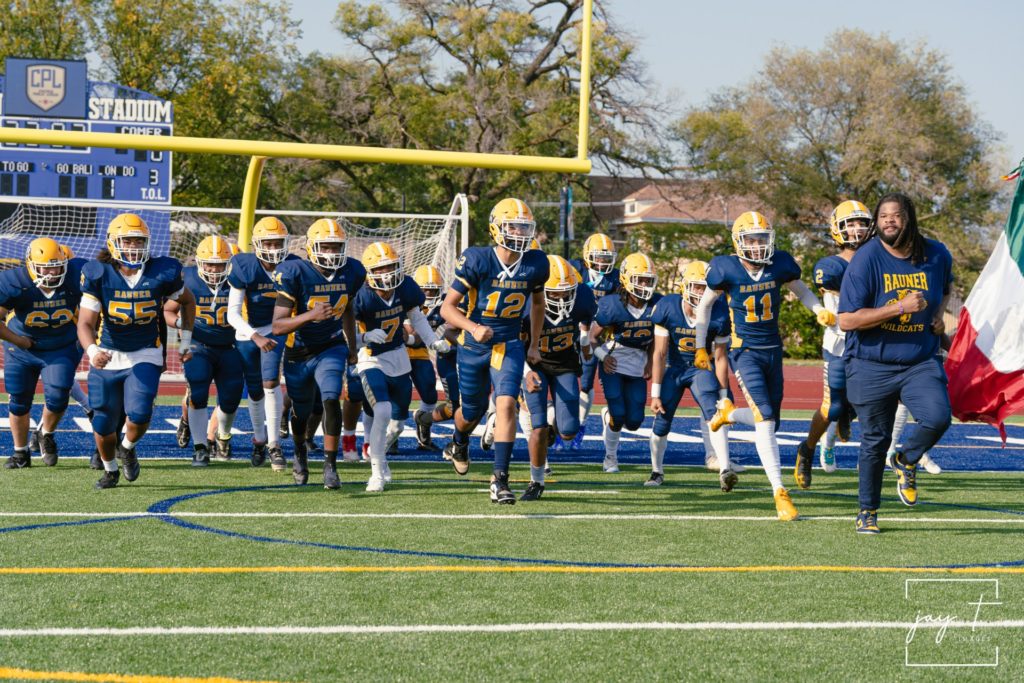
Daron Brown, ’16, M.S.Ed. ’21, runs out on the field with his team as head coach at Rauner College Prep. (Photo credit: Jeremy Toney)
Behind every winning team is a story — sometimes an underdog comeback, an inspiring coach, or a roster of players rewriting their futures. The football team at Rauner College Prep in Chicago has all three.
When proud former student-athlete Daron Brown, ’16, M.S.Ed. ’21, launched his coaching career, he relied on the principles he had embraced during his time at NIU.
Today, as head coach of football, boys basketball and track at Rauner College Prep, Brown has not only turned the struggling football program around, but he has built a culture where all student-athletes thrive.
“When I first arrived, Rauner’s football team was 0–7,” Brown said. “Since then, I’ve helped rebuild the program from the ground up. We’ve gone from 0–7 to 7–2, winning our conference championship and earning the first state playoff berth in school history. We’ve done it with a three-coach staff and a roster that’s grown from 20 to nearly 40 committed student-athletes.”
Brown credits his Huskie experience for laying the foundation for his success, while also emphasizing the dedication of his students — young athletes who bring their best to every practice, game and classroom.
“Everything I do is rooted in what NIU instilled in me,” Brown said. “Discipline, community, and the belief that education and athletics can work hand in hand to change lives. These are young people defying odds, rewriting narratives, and embodying the same grit and pride I learned in DeKalb.”
Earning a full scholarship, Brown came to NIU from Mumford High School in Detroit to play football.
“I chose NIU because when I visited, it felt like home,” he said. “The players treated me like family, and the coaches and academic staff all knew my name and where I was from. NIU was the right place for me, and I felt that from the first moment I stepped on campus.”
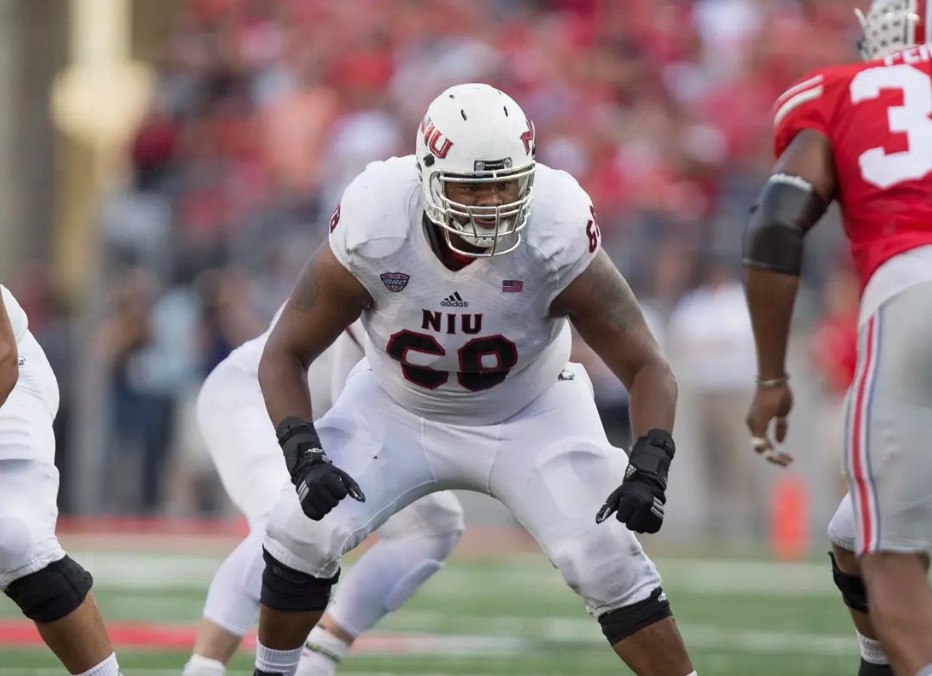
Brown made his first start at Ohio State and, by the end of his collegiate career, had played in 24 games as both a guard and a tight end. He also walked away with two MAC Championships and four MAC West Championships as a member of the Huskies.
During his freshman year, the Huskies went to the Orange Bowl.
“That experience was one of the greatest feelings of my life and taught me what a true winning program looks like and what the world had to offer.”
He continued, “NIU was a wake-up call; it showed me what real work requires. I learned that nothing comes easy. I had to put in extra workouts to get the weight off, spend extra hours at study tables to get my grades up, and hold myself accountable to the things I said I would do. We were a close group, and it taught me what brotherhood truly meant. We came from everywhere but shared one common goal, and we chased it as a family.”
After earning his bachelor’s degree in organizational and corporate communications and gaining professional experience in retail, Brown returned to NIU to pursue a master’s degree in higher education and student affairs. During graduate school, he served as a graduate assistant for NIU’s Academic Support Services and as a graduate research assistant for Fraternity and Sorority Life.
Upon graduating, Brown became a student success coach at Lincoln Land Community College, helping students build confidence and skills to succeed — just as NIU had done for him.
“My work as a graduate intern, along with my own college experience, guided me toward this role,” Brown said. “I also had a strong relationship with my academic advisor, CJ Oates, who pushed me to grow by giving me books, having honest conversations, and giving the kind of guidance I needed as a collegiate athlete and a young man.”
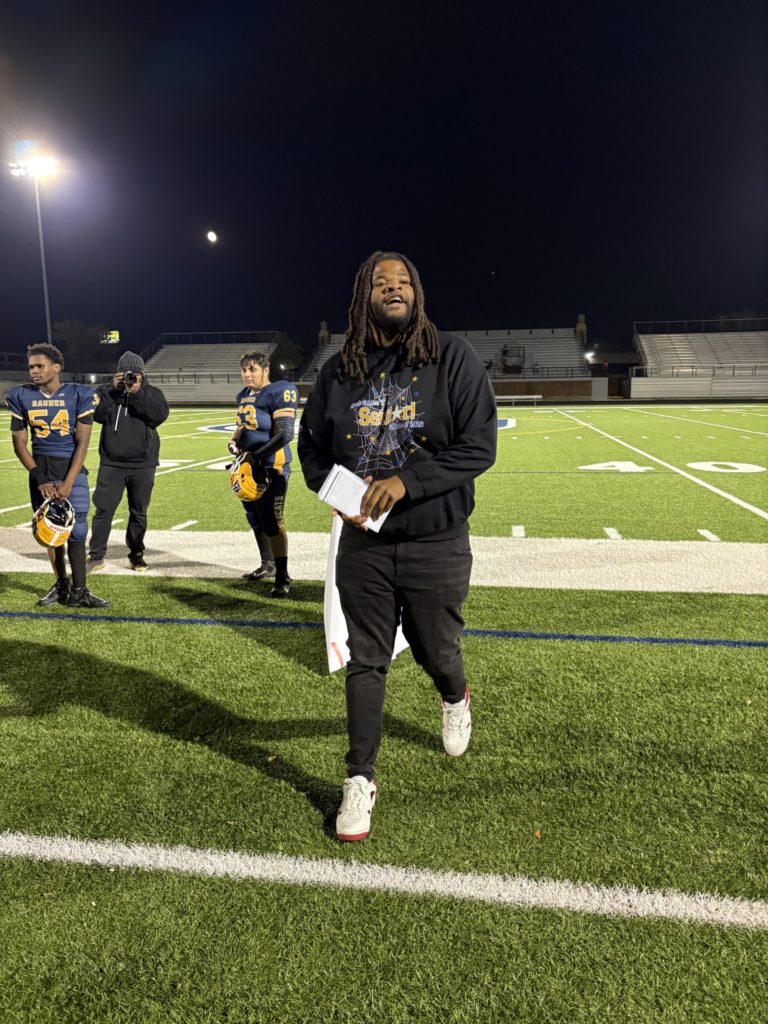
Daron Brown, ’16, M.S.Ed. ’21, stands under the Friday night lights at Rauner College Prep. (Photo credit: Jeremy Toney)
Knowing he wanted to coach, Brown joined Rauner College Prep in 2022 as the junior varsity boys basketball head coach. His leadership and impact were quickly recognized, leading to his promotion to head varsity boys basketball coach and to head coach of the football and track programs.
“Working to rebuild athletic programs meant getting everyone to believe, not just the players, but the school community,” Brown said. “It was a culture where people didn’t know what success looked like yet. By creating structure, bringing experience with great coaches, and believing in our kids, we changed what was possible.”
For Brown, success isn’t measured only in wins and losses; it includes his impact beyond athletics. In addition to coaching, he launched the Student Academic Achievement Support System, modeled after NIU’s SAASS program. Through twice-weekly mentorship sessions, Brown focuses on study habits, time management and accountability — recruiting and training peer mentors to help student-athletes excel both in the classroom and on the field.
“The SAASS program at NIU changed my life,” he said. “It’s where I grew academically and learned what it took to be successful in college. I brought the SAASS program to Rauner to give our student athletes the academic structure, organization and confidence I wish I had earlier in my career. Our players gain real-life experiences they will carry with them for the rest of their lives.”
Brown’s commitment to holistic development continues in his role as assistant dean of culture and program coordinator for OpenSeat, which offers individual social-emotional support for students. In these positions, Brown provides targeted support for high-need students, facilitates restorative practices, monitors behavior trends prompting early interventions, and manages more than 80 personalized sessions designed to promote social-emotional growth, academic success and behavioral interventions.
Together, these efforts create a culture where students are empowered to thrive in every aspect of their lives.
“Everything I’ve lived through has prepared me for this moment,” Brown said. “I’ve walked this path every day, putting the pieces together through real relationships, high expectations and consistency. That’s what makes me the right person to help lead the culture at Rauner because I’ve been where our students are, and I’ve spent my life becoming the person I wish I had at their age.”
For Brown, the real victory is helping young people rewrite their story and believe in what’s possible.
Learn how you can help inspire the next generation of leaders at niuforward.com.
Feedback Form
Please provide feedback here or report any errors.