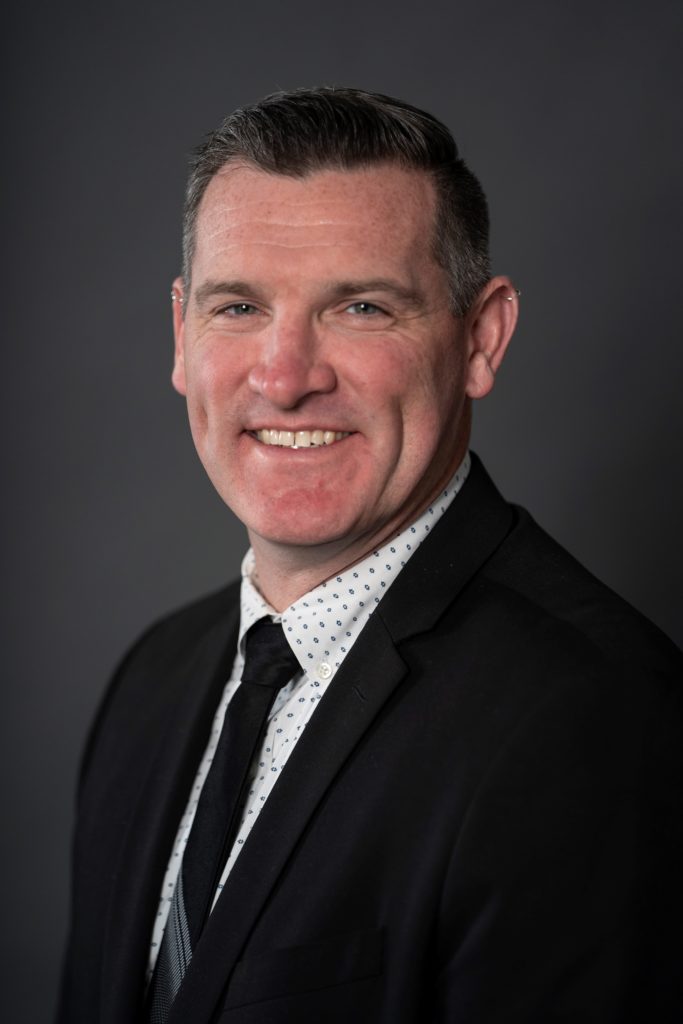
Jonathan Koepke ’01, M.A. ’04, M.B.A. ’12, purchased ENCAP Incorporated in 2020. (Photo credit: International Erosion Control Association)
Armed with critical thinking and analytical skills honed through earning his bachelor’s and master’s degrees in history at NIU, Jonathan Koepke successfully navigated projects and challenges early in his career — but it was enrolling in the Executive MBA program at NIU that gave him the confidence and business acumen to buy a company.
Today, Koepke is the president and owner of ENCAP Incorporated, a professional services company specializing in ecologically sensitive and water resource-oriented projects.
“We perform ecological consulting, ecological restoration, erosion control, and stormwater management projects large and small,” Koepke said. “We specialize in providing proactive and practical solutions to environmental and ecological challenges on public and private lands. Our professionals work for municipalities, forest preserves and park districts, government agencies, conservation organizations, private landowners and land developers.”
The company is located in DeKalb and employs approximately 45 people.
In 2006, while working at the Kane-DuPage Soil & Water Conservation District, Koepke was recruited to join ENCAP to start a division that performed erosion and sediment control services on construction and restoration sites. He moved into management roles over the next several years and was promoted to a company vice president in 2010. In that same year, he enrolled in the Executive MBA program at NIU.
“There was a lack of business education and expertise in the company, so I decided to pursue my MBA,” Koepke said. “The Executive MBA was an accelerated program and was a huge challenge and time commitment while working full time, but I could not be the successful business leader I am today without that experience and education. It helped propel me to general manager and a minority shareholder, where I managed all aspects of business operations until buying the company in 2020.”
Koepke says taking the leap to purchase the business from the previous owner is the accomplishment he is most proud of in his career.
“It was not without its challenges, but it’s been one of the most rewarding things I have done, and not necessarily from a financial reward standpoint, but more of how I could make the business my own and make decisions based solely on my vision of our company,” he said. “It’s been incredible to see our company and staff grow and develop, and to continue to work together to improve our efficiency, service and quality.”
Koepke is an active leader who enjoys working alongside crews to make a tangible difference in the health of the environment. He is grateful to have a successful business that provides excellent career opportunities while also contributing to the restoration and protection of the natural environment.
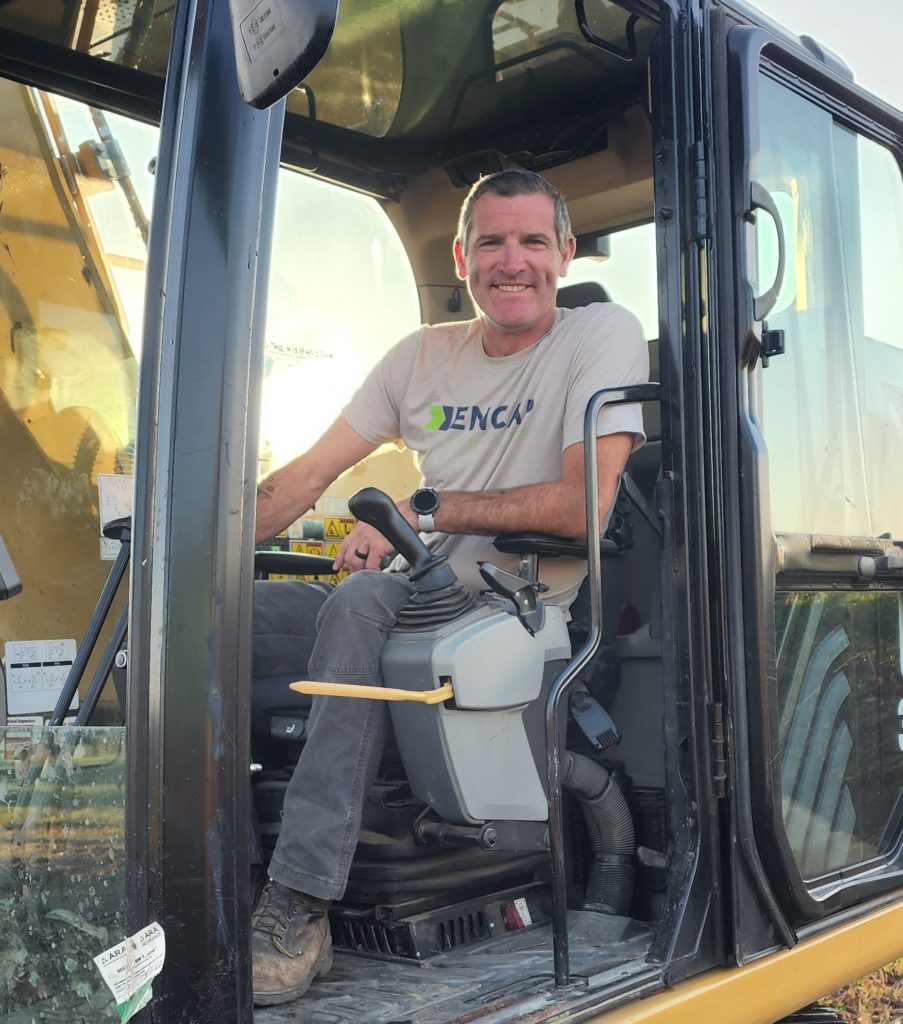
Jonathan Koepke enjoys working in the field with ENCAP crews. (Photo credit: Abraham Harris)
“It gives me great pleasure to make a lasting impact on the quality of life for our employees, the communities we work in, and the natural world. I am very fortunate to have the opportunity to do what I do as a career. I also love getting my hands dirty. I am not a president or owner who sits behind a desk. I would rather be behind the controls of an excavator on a stream restoration project. That’s my happy workplace.”
Growing up, Koepke enjoyed getting his hands dirty from an early age. He lived in New Lenox, Illinois, but would spend time with his grandfather on his family’s farm in southwest Illinois, where he learned about soil, erosion and conservation practices. He loved to canoe, camp, fish, hunt and spend as much time as possible outdoors. In addition to his parents, his grandfather had a significant influence on his growth.
“My grandfather, Paul Scheffel, and I had a very close relationship, especially after I finished college,” Koepke said. “He taught me a great deal about life, and we became great friends. He was a mentor to me, helping me throughout my career and personal life. It was my time with him and helping care for the conservation land on our family farm that I got interested in the field that ultimately became my career.”
When it was time for college, Koepke first attended Northland College in the Northwoods of Wisconsin, on the shore of Lake Superior. He found it to be beautiful, but it wasn’t the right fit. He wanted to be closer to home and his family at a university where he could grow and expand his perspective.
“As I looked to transfer to NIU, Marvin Rosen, my undergraduate advisor in the Department of History, convinced me that NIU is where I wanted to be,” Koepke said. “He was a wonderful man who treated me as a person and not just a number. He sought to challenge me and open up opportunities for me that I hadn’t seen for myself. Marvin cared deeply about his students and their success. He really had a passion for teaching, mentoring and his students. I made sure to take every class he offered. He was smart, quirky, and funny, and unfortunately, died far too soon. He was a great person, and I will always miss him.”
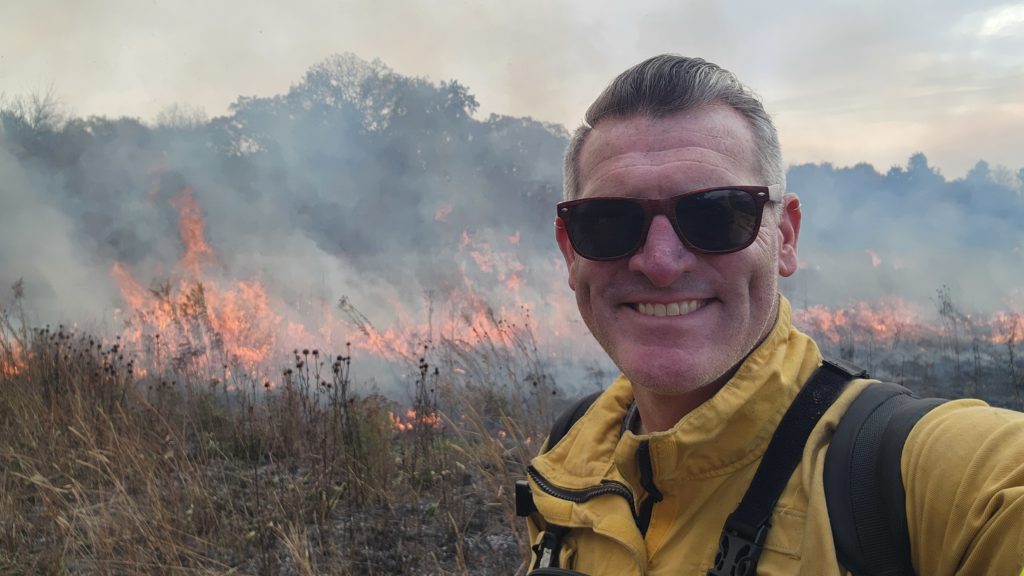
Jonathan Koepke stops for a selfie during a prescribed burn of a native prairie. (Photo credit: Jonathan Koepke)
Koepke also pursued a minor in environmental science. He combined this with history by studying the history of agricultural advertising by the DeKalb Ag and its influence on the economic and ecological impact of farming in the Midwest. His undergraduate capstone research paper on the topic was awarded the prize for the top research capstone in the Department of History. Later, he continued his research on the same subject for his master’s thesis.
“NIU was an important part of my career and developing me into the person and professional I am today,” Koepke said. “Through taking my education and professional development seriously, and always looking for opportunities, I have been able to make calculated risks to advance my career and take chances that have propelled my success.”
After completing his MBA, Koepke served as an e-mentor for management students at NIU for five years, helping guide them to achieve their own successes.
“I believe in doing the right thing for the right reasons,” he said. “I see myself as measured not by my personal success, but by the success of my clients, employees, and business partners. If all those things are working, then I’m doing right, and my success follows.”
Help create a greener NIU through innovation, education and action. Visit niuforward.com.
Haley Cummings, ’16, M.S. ’18, is working on innovative tools that will impact Mars exploration at NASA’s Ames Research Center in California, but her journey began as a hardworking student-athlete at NIU.
According to NASA, the ROAMX Project “will significantly enhance rotorcraft capabilities on Mars, thereby enabling a vast expansion of science experiments and exploration of the surface and atmosphere of Mars.”
“It is a huge reward to see the work that my team and I have been working on get used for next-generation helicopters on Mars,” Cummings said. “Some of the research that we did was groundbreaking and led to new discoveries of how fluid behaves at Mars flight conditions. It is incredibly rewarding to see the work I’m doing making an impact on the science and exploration capabilities that we have for Mars.”
After her freshman year, Cummings applied for a number of internships. She earned an internship at NASA Ames in the Rotorcraft Aeromechanics Branch.
“That internship changed my life,” she said. “I fell in love with the San Francisco Bay Area. The mentality of people matched my mentality, and everyone was a nerd, like me. My coworkers were incredible, and the work I was doing was so exciting. Putting the mechanical engineering knowledge I was learning in my classes into practice at my internship was beyond cool – and really helped the concepts sink in.”
She earned an additional NASA internship in the spring of her senior year and was able to work on Mars helicopter research.
“While I was working on my master’s, I applied for a NASA Pathways Internship, which is basically a co-op program, and I was hired,” she said. “When I finished my master’s, I started full-time at NASA Ames and have been there since.”
She discussed some of the projects she has worked on during her time at Ames.
“My first project that I started during my second internship was the mechanical design of a test stand to test blades for Mars helicopters,” she said. “My second project was designing the Side-by-Side Test Stand. I was deputy test director for that wind tunnel test, which was looking at the performance of intersecting rotors at various degrees of rotor separation.”
Cummings and her team submitted a proposal to NASA’s Early Career Initiative (ECI) Program, which is open to NASA early-career civil servants.
“We were awarded an ECI in 2021 to pursue the computational optimization and experimental validation of next-generation rotors optimized for performance on Mars,” she said.
In February 2025, the team finished the experimental portion of the project, which is the ROAMX project.
“I learned so much from being the principal investigator for that project,” she said. “We have published a couple of papers and have several more lined up to publish. The rotor that we designed and the design framework that we developed in the project have been used for the next-generation Chopper helicopter that the Jet Propulsion Laboratory is working on. All signs point to our rotor being used on the next helicopter that gets sent to Mars!”
Cummings grew up in Texas, with a few years of her childhood spent in Indiana. Her dad worked for Continental and United Airlines on the business side, and her mom is a CPA who was an accountant.
“My dad worked for Continental while the Continental/United merger was happening, and he ended up getting transferred to Chicago from Houston during my junior year of high school,” she said. “My mom and siblings and I stayed in Houston for my last year and a half of high school so I could finish school in Houston. My dad, thanks to flight benefits, would basically commute to Houston on the weekends. We lived with my grandma in Dickinson, Texas during that time.”
Cummings and her two younger siblings were homeschooled by their mom through high school.
“We also took classes in different homeschool groups, and all of us took dual-credit classes through community colleges during high school,” she said.
She earned both of her degrees in mechanical engineering and was able to graduate from NIU in two and a half years because she finished her general education classes at community college.
For someone who now works for NASA and received dual degrees in mechanical engineering, Cummings said math was not easy for her as a child. But she quickly caught up during high school.
“When I was taking math at home using Saxon Math, I was pretty terrible at it and did not enjoy it at all,” she said. “When I started taking math at the local junior college in Texas during my sophomore year of high school, everything clicked. I had some great teachers, started with college algebra and got all the way through differential equations and calculus 3 by the time I graduated. I loved it because it was so logical, and I knew I wanted to do something with math. I also took physics at the junior college and started to think that maybe I wanted to go into engineering.”
“While I was growing up, I always played soccer,” she said. “I played competitively for a couple different teams in the Houston area during junior high and high school.”
She knew she wanted to play Division I college soccer, and at the time, the recruitment process started during her sophomore year of high school. Her dad working in the Chicago area made her consider college in Illinois, along with Texas.
“I was looking at schools in Texas, but when my dad got transferred to Illinois, I started looking in Illinois too,” she said. “I found NIU because of the engineering program, the soccer team, and the proximity to Chicago. I started a correspondence with the NIU coaches and my coach from NIU, John Ross, flew down to Houston to watch a practice at my club team, Albion. Next thing I knew, I was visiting NIU and meeting the team and coaches. Everything happened really quickly.”
Cummings earned an academic and an athletic scholarship to help her with finances during her time at NIU. She also found that as a soccer player, she had a built-in support system as soon as she arrived on campus.
“Everyone kind of becomes instant family,” she said of her teammates.
She recalls the impact of training at the Yordon Center.
“My freshman winter was the first time the team was able to practice inside the Yordon Center in the winter, and it made a huge difference for us to be able to practice there right next to the weightlifting gym and the training room and recovery equipment,” she said. “Yordon was probably among my favorite places to be on campus, especially with all the resources for studying and the areas to sit and do homework, and then the ability to go kick a ball around in between to take breaks.”
She lists a number of important figures in her life while at NIU.
“College felt like a big transition to me, and I was lucky to have my coach, Christie Chappell, as someone to look up to and take advice from,” Cummings said. “She was willing to help me train outside of normal practice times and was very inspirational to me. She was always building me up and encouraging me to be the best version of myself that I could be.”
“Professor Coller has won several awards for his outstanding teaching ability, and I definitely benefited from that,” Cummings said. “Every class I took from Professor Coller was my favorite class. He made learning engineering fun, and the concepts also stuck with me, and neither of those things are a given in engineering.”
Associate Professor Sahar Vahabzadeh was another mentor for Cummings.
“I worked on my master’s thesis under her,” Cummings said. “She constantly inspired me with her dedication to excellence and her commitment to help me learn. I wrote my first journal paper under her supervision, and I learned what it means to write a solid journal paper. I’m very thankful for her mentorship.”
Cummings said the skills she learned from Coller and Vahabzadeh’s courses were game changers.
“I take those skills with me and have built upon them in my career. I’m thankful I got to get hands-on experience in my master’s thesis work,” she said.
Cummings also praised the lessons learned during her time on the soccer team.
“I learned that sometimes being a leader does not look like you think it would or should,” she said. “I got the opportunity to be a leader from the bench instead of from the field. I also learned about personal responsibility and time management. And how to be a good teammate.”
To help inspire discovery and innovation at NIU, visit niuforward.com.
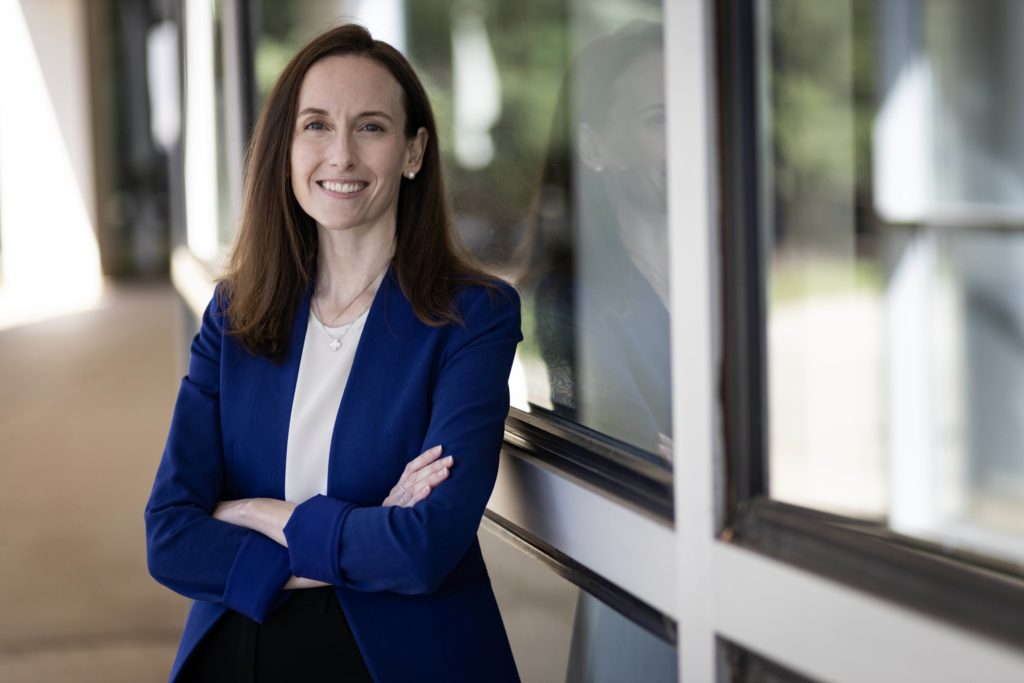
Thomas Konczyk, director of partnerships, Cirque du Soleil in the United States. (Photo: Tom Konczyk)
“A true Huskie isn’t afraid of doing it ‘The Hard Way’; they get after it, grab it, and never let it go!” said Thomas Konczyk, ’07, MBA ’15, when asked what qualities define a true Huskie.
Tom was, of course, speaking of “The Hard Way” motto first embraced by Huskie football players, but now a mindset etched into the identity of every Huskie. It represents the hard work Huskies endure to overcome challenges, even when the path is steep, because with hard work, success is always sweeter.
Some Things Are Just Meant to be Easy
Tom met his wife, Julie Konczyk (née Edmunds), ’07, M.A. ’11, while at NIU, and despite yielding high rewards for their academic and professional stamina, finding each other is notably their sweetest success story.
“We worked hard together, supported each other in undergrad and grad school,” Tom said. “I got myself into some shenanigans, as any student does, but our focus was always on bettering ourselves and starting a life together. She is brilliant, dedicated and my true inspiration.”
The feeling is mutual, as Julie’s favorite NIU memory is meeting Tom.
“We lived in the same off-campus apartment building in DeKalb and met shortly after he moved in. We have been inseparable ever since,” she said.
Double Degrees Laid the Groundwork for Success
Leaving his close-knit family in Naperville, Illinois, Tom followed in the footsteps of his older brother and came to NIU. After meeting Professor Rick Ridnour, Ph.D., he decided to pursue a marketing degree with an emphasis in professional sales and later earned his MBA.
“I took an impactful course taught by Professor Ursula Sullivan, Ph.D., during my MBA,” Tom said. “Dr. Sullivan is not only brilliant and a tremendous educator, but she is also genuine, professional and kind. NIU shaped my career path, 100%.”
Today, Tom is the director of partnerships for Cirque du Soleil in the United States. He aligns brands to build partnerships with Cirque across its portfolio of touring and residency shows, as well as with its innovative and best-in-class production capabilities.
Tom spent eight years of his career at Feld Entertainment, where he served as a regional sales manager of global partnerships, traveling across the United States to build dynamic partnerships for events such as Supercross, Monster Jam, Ringling Bros. and Barnum & Bailey, Disney on Ice, and others. He also spent five years representing his alma mater as the general manager of Huskie Sports for Learfield, a media and technology company specializing in college athletics.
“I’m pushing 20 years in media, sports, and entertainment sales and marketing,” Tom said. “The connections I have made, the people I have met, and the events I have experienced while traveling have been nothing short of amazing.”
Julie Konczyk, associate dean of continuing education, College of DuPage. (Photo: College of DuPage Newsroom)
A Passion for Education Unearthed
Julie came to NIU from the north suburbs of Chicago. She chose NIU, seeking a large, diverse university with strong academics, and was drawn to the Anthropology Department and Museum Studies Program.
Thankful for receiving several scholarships and additional support for working as a tour guide in the admissions office and as a peer advisor in the Honors Program, Julie earned both a bachelor’s and a master’s degree in anthropology.
“The Honors Program largely supported me through my undergraduate work, and I am so grateful to the Center for Southeast Asia Studies (CSEAS) Foreign Language Area Scholarships for supporting my graduate work and study abroad experiences,” Julie said. “I studied abroad at an archaeology field school that explored the pre-Roman settlements in western Sicily. I worked alongside a global team of students and researchers for a summer, collecting data and digging through specific sites identified for that season.”
Julie said NIU was the perfect place for her, offering her many opportunities to thrive. She fondly remembers the Department of Anthropology Chair, Judy Ledgerwood, for her guidance, leadership and scholarly excellence, in addition to CSEAS overall.
“CSEAS has top-tier faculty, staff and academics and offers graduate students unparalleled study abroad opportunities and research connections,” Julie said. “I was supported academically, socially, financially and professionally throughout my time at NIU and am so grateful to those who helped make that possible for me.”
Today, Julie is the associate dean of continuing education at College of DuPage, where she oversees the career and professional training team, the homeland security education team and their enrichment programs. Offering diverse programming and working with experts in their field, she is proud of the College’s growth and its ability to adapt to the community’s educational needs.
“For me, it’s really about the students and faculty I get to work with,” she said. “In education, we often say we’re changing lives—it can sound disingenuous on the surface, but it’s true. There’s nothing like seeing a student succeed, hearing a parent’s gratitude for sparking the joy of learning in their child, or watching someone achieve what once felt impossible. I’ve been lucky to work with such an inspiring group. I can’t imagine doing anything else.”
Before joining the College of DuPage for her 10-year-plus career, Julie spent over four years at NIU, where she served as the external programming credit coordinator in the College of Liberal Arts and Sciences.
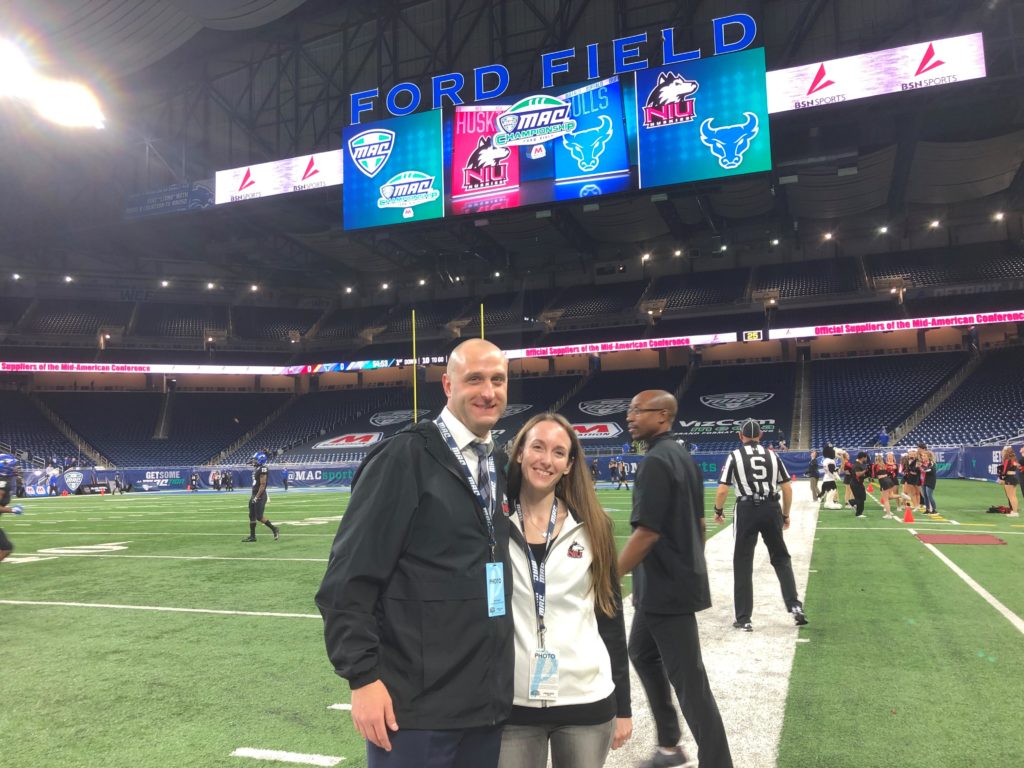
Tom and Julie Konczyk cheer on the Huskies at Ford Field. (Photo: Tom Konczyk)
The Power of Incremental Growth
Hard work and perseverance guided Tom and Julie’s professional journeys; still, they credit their achievements to embracing the power of slowing down and recognizing that success doesn’t require perfection.
“I try to be better every day, do a little more, be a little more efficient, try to make something better, try to make someone’s day a little better,” Julie said. “I’ve worked with a number of people who can’t seem to move forward unless they feel 100% ready, or the project is 100% perfect. I make mistakes and see better decisions in hindsight; I also make a lot of great decisions. I focus on the balance, trying to make something a little better each time rather than chase short-term wins or a false sense of perfection.”
“Maya Angelou said, ‘Do your best until you know better, then when you know better, do better,’” Tom said. “Slow down, listen, learn and provide feedback. It’s a skill we will never perfect.”
With insights that echo each other so closely, it’s almost as if Tom and Julie have been sharing notes since their graduation.
It’s no surprise that two Huskies, each armed with two degrees, equals exponential wisdom and Huskie Pride.
Discover how you can support Huskies through scholarships here.
Kelly Bauer, ’15, caught the news bug at an early age, which led to NIU and, ultimately, to her becoming a full-time journalist in Chicago.
Bauer was a founding hire at the nonprofit news organization Block Club Chicago, established in 2018 following the dissolution of the news website DNAInfo by three former DNAInfo editors. Bauer currently serves as Block Club Chicago’s senior editor.
Bauer, who grew up in the Chicago suburbs with her parents and four siblings, initially struggled with reading as a child, but once she overcame that challenge, she found that she loved writing stories.
“I’d write stories to give to my family members as birthday gifts,” she said. “When I was around seven years old, a relative got me a subscription to National Geographic, and I fell in love with journalism. With my mom’s help, I created a classroom newspaper that I’d print at home.”
Bauer later joined her high school newspaper, and when she came to NIU, she quickly joined the Northern Star as a reporter.
Bauer came to NIU because of its affordability, and scholarships helped ease her financial burden.
“I was a first-generation college student, and I was wholly responsible for paying for college,” she said. “I decided to go to NIU because I was offered scholarships that would make it a more affordable option for me; without those scholarships, I probably would not have been able to attend college. I had also heard good things about the Northern Star.”
Bauer lived on campus in Grant Towers, and spent a lot of time at the Northern Star office in the Campus Life Building, which she said was her favorite place on campus.
After starting as a reporter, she quickly ascended the Northern Star ranks, becoming the campus news editor in the second semester of her freshman year. After that, she was named the newspaper’s editor in chief and remained in that position until her graduation.
“I was in the office as much as possible to work on the paper and hang out with my coworkers — who became some of my best friends,” she said. “I’d study, do homework and write my papers at my desk. I definitely fell asleep on the couch there more than once.”
Bauer counts Shelley Hendricks, Northern Star advisor, as her mentor during her time at NIU.
“Shelley was, and is, a very caring and thoughtful journalist and adviser — she’d give me constructive feedback about how the paper was doing, but then she was also available when I needed to vent or when I had worries about the future,” Bauer said. “Her advice helped me grow as a journalist in immeasurable ways. It makes me so happy to see her — and the Star’s longtime business adviser, the incomparable Maria Krull — whenever I’m back at NIU.”
Bauer said another Northern Star alumna had started working at DNAInfo, and through her peer, she was able to obtain a summer internship at DNAInfo during her junior year.
“I’d go to DNAinfo on weekdays and then rush back to DeKalb to create the weekly summer paper,” she said. “DNAinfo was so welcoming that they had me back the next summer — and then the next, when they heard I’d just graduated, they offered me a job.”
Bauer started as a breaking news and general assignment reporter at DNAInfo.
“It built on a lot of the skills I’d learned during my internship and at the Star — but also taught me so, so much,” she said. “I traveled all over the city for stories and fell even more in love with Chicago.”
After DNAInfo’s owner shut the publication down in 2017, three of its editors – Jen Sabella, Stephanie Lulay and Shamus Toomey – started Block Club Chicago as a nonprofit newsroom the following year.
“I signed on instantly as a reporter and was part of Block Club Chicago’s founding team,” Bauer said. “I worked my way up the rungs and became an editor. I believe strongly in the importance of Block Club’s work: providing hyperlocal, nonpartisan news that holds powerful people to account and helps neighbors better connect and understand their city.”
During the height of the COVID-19 pandemic, Bauer served as Block Club Chicago’s breaking news editor and provided live coverage of news conferences from city, state and federal officials.
“There was a period where I worked almost 75 days in a row — taking just one day off to celebrate my anniversary — because I knew people were counting on me and Block Club for nonpartisan, accurate information,” she said.
Bauer said she developed the skills she needed while at NIU working for the student newspaper.
“The breaking news skills that I developed while at the Star — covering local crime, crazy weather, electric outages and more — were the foundation for how I covered the early days of the COVID-19 pandemic,” she said. “I learned how to confirm information quickly and convey it accurately to people who were desperate for updates. In fact, the first time I ‘live tweeted’ a news event was at NIU — and then that became a key part of how I conveyed information to readers in need during the pandemic.”
Bauer points to a series of COVID-related stories that she is proud of, unveiling the actions of a Chicago hospital executive who allegedly steered questionable contracts to his friend, business partner and neighbor, and showing that pop-up testing companies were providing questionable results while collecting hundreds of millions of dollars from the government.
“My reports spurred a number of state and federal investigations — and multiple people are now facing charges because of them,” she said.
Bauer points to the skills she learned while a student journalist at NIU as crucial in building the expertise needed for reporting investigative stories like those.
“I wouldn’t have been able to pursue those stories if not for what I learned at NIU,” she said.”I did investigatory work at the Star, learning how to use the Freedom of Information Act, obtain and analyze public records and how to connect with sources so they understood they could trust me. Those were all key skills for the work I do now.”
In addition to the professional networks and skills she built while at NIU, as an alumna she shared that she also gained a very special personal relationship.
“I met my spouse through an NIU connection,” she said. “One of my good friends was an editor with me at the Star. After we both graduated from college and moved to Chicago, I visited my friend — and fell for his roommate. We got married less than a year later. And he’s accompanied me back to NIU’s DeKalb campus a few times!”
To help inspire discovery and innovation at NIU, visit niuforward.com.
M. Nadine Zimmerman, Ph.D, found her calling at NIU, teaching generations of educators as a member of the faculty for more than three decades.
Zimmerman touted the good work of Steven M. Howell, the KNPE department’s MN Zimmerman Endowed Chair, named for Zimmerman. She praised him for keeping the department modern and innovative.
“He’s responsible for redesigning the building for the modern era,” she said. “It’s a different world nowadays. You can see the difference. Steve is being very innovative and changing the rooms to meet the times.”
Zimmerman was a standout athlete in her early years while growing up on a Pennsylvania farm, where she learned to milk cows and tended to the family garden. She graduated from Robert P. Smith High School in Bedford County, Penn., and earned a bachelor’s degree from Lock Haven University in Lock Haven, Penn.
She played basketball in both high school and college, and at one point she said she was being scouted by a professional women’s team. However, she turned down the lucrative offer of being paid to play the game.
“I said, ‘No.’ I didn’t want to go that route,” she said.
Instead, she pursued graduate school. Zimmerman received a master’s degree in guidance and counseling from the University of Pennsylvania in Philadelphia before coming to NIU.
Zimmerman said one of her professors from Lock Haven University had visited NIU and had recommended her to someone on campus who told them they were hiring faculty.
“My professor said, ‘Well, I have a suggestion for you,’ and that’s how I got to Northern,” she said.
Zimmerman said her parents were late getting her to the airport in Pittsburgh for her flight to Illinois, so she had to take a later flight and no time to change for her interview with the head of the College of Education, Wilbur Yauch. She recalled with good humor being interviewed by Yauch while wearing shorts.
“I had my interview in my shorts, and I got the job,” she said.
Zimmerman taught physical education, coached, and served as department chair and associate dean for one year each while at NIU.
Zimmerman said she and her fellow faculty helped design Anderson Hall, which was built in 1964. The hall was dedicated to Miriam Mills Anderson, who organized, developed, and oversaw the proliferation of the graduate program of physical education for both men and women during her time at NIU. Along with helping participate in the design of the building, she helped shape the curriculum programming.
“You could say I helped get Anderson Hall built,” Zimmerman said. “During the day and on weekends, we had a little room in Still Gym and we helped design Anderson Hall.”
She recalled the first day that the new building opened. It was a special moment for the faculty and the students.
“That was a pretty awesome day,” she said. “I still have the shovel from the groundbreaking.”
Prior to Anderson Hall, women’s physical education was taught at Still Gym, built in 1928. Zimmerman said the men’s physical education classes were across campus at the Chick Evans Field House, built in 1957.
“One day, I don’t know who said it, they said we were merging the men’s and women’s physical education programs,” she said.
Zimmerman said she stayed at NIU for all those years because she loved her students. She related to many of them because they came from farming backgrounds just like her.
“There were lots of big farms around here, and these are the kind of people I was working with,” she said.
Zimmerman continued her learning journey while working full-time at NIU, earning a Ph.D. from the University of Wisconsin-Madison. She took classes on Saturdays during the school year and lived in Madison during the summer months as she attended classes full time.
Zimmerman encourages others to give to NIU. She has given generously through CGAs. A CGA provides the donor a fixed-income stream for life in exchange for a gift supporting NIU.
“I had some good advice on investing and was also thinking, how am I going to support myself when I’m no longer able to teach?” she said. “With the gift annuities, you give and then you get. I think enough people don’t know about gift annuities; they certainly give you support.”
Zimmerman said she gives so that KNPE and NIU have a bright future.
“You put your money where your mouth is, and I want the program and NIU to continue to grow,” she said. “I want them to thrive.”
For more information on being a philanthropic Huskie, click here!
Dedicated NIU alumna volunteer Cassandra (Patha) Busse, ’92, believes her volunteer work creates a powerful ripple effect that uplifts students and fellow alumni. She brings her passion to the NIU Alumni Association Board of Directors beginning July 1.
“One conversation can inspire a student to pursue an opportunity they had not considered,” she said. “One networking event can lead to a mentorship or a job offer. It is about building a community that supports each other long after graduation. This is what makes volunteering so incredibly fulfilling and why I am thrilled to join the board.”
Busse says volunteering has been a fantastic way to stay connected, expand her network and renew her Huskie pride.
With the desire to give back to the community that played a formative role in her life, Busse has been involved in several NIU Alumni Association volunteer initiatives, including the University Honors Job Shadow Program, the NIUniverse Social Media Ambassador Program, and the Huskie Postcard Project. She has also served as a judge in the BELIEF: Ethics Program Case Competition, reviewed resumes for current finance students, and participated in the Illinois School District 214 College Fair to recruit the next generation of Huskies.
“These initiatives have helped bridge the gap between current students and alumni, providing students with career insights, encouragement and real-world advice,” she said. “For alumni, these events rekindle school spirit and foster valuable professional connections.”
Busse describes her experience volunteering at the NIU table for the District 214 College Fair.
“I shared my personal NIU journey with curious and excited students exploring their future,” she said. “While answering their questions, I saw their eyes light up with possibilities. It was rewarding to help them imagine themselves as part of the Huskie family.”
Busse recalls her NIU student experience as transformational. She was actively involved in the Sigma Lambda Sigma Service Sorority and, as a member, engaged in various community service projects that emphasized compassion, advocacy and support for underserved populations. Some of her most memorable activities included regularly volunteering at a local homeless shelter through Public Action to Deliver Shelter (PADS), participating in the live Easter Seals Telethon to raise funds for children and adults with disabilities, and working with a local women’s domestic violence shelter promoting safety, dignity and empowerment for women and children affected by domestic violence. Through these experiences, she developed her communication skills, a sense of civic responsibility and a passion for advocacy.
As a College of Business student studying Operations Management and Information Systems (OM&IS), Busse says she saw the impact alumni could have through their mentorship and support in the college.
“Seeing alumni support the college and its programs stuck with me, and I knew that once I could do the same, I wanted to step up,” she said. “NIU instilled in me a powerful sense of community responsibility and volunteering is how I choose to uphold that.”
However, her most fond memory is of the Monday night bowling league at the Huskie Den, where she met her husband, Jeff Busse, ’94.
“The supportive environment at NIU helped me grow and shaped who I am today, both in my career and in my personal life,” she said. “It also brought me my husband of 30 years. NIU is more than just a school; it is a community that gave me so much, and because of this, I will always be proud to contribute to its continued success.”
Today, with a long career in the supply chain field, including materials management, inventory control, warehousing, purchasing and logistics, Busse is the supply chain director at nVenia. She also enjoys sharing her industry knowledge as an adjunct instructor at Benedictine University, where she teaches an MBA operations strategy course.
“My operations management degree perfectly complemented my chosen career path,” she said. “As I progressed in my career, I saw firsthand how crucial mentorship, guidance and networking are for success. That perspective made me even more motivated to provide those things to NIU students who are just starting out.”
In addition to her bachelor’s degree from NIU, Busse earned her MBA from Roosevelt University with an emphasis in international business and has several certifications through the Association for Supply Chain Management.
With her extensive knowledge and experience, Busse is committed to helping NIU continue its mission of empowering students from all backgrounds by joining the NIUAA Board of Directors, giving back and elevating others within the Huskie community.
“Their energy is contagious,” she said about interacting with students and fellow alumni. “Reconnecting with NIU has made a real difference in my life.”
NIU alumni volunteer their time in meaningful ways. Want to brainstorm ways you can get involved? Contact Eric Glasby, ’15, M.S.Ed. ’18, at eglasby1@niu.edu.
Ja’kobe Jones aims to become a financial advisor with a focus on serving underrepresented communities, after achieving his goal of earning a bachelor’s degree in finance in the spring of 2027.
“I am passionate about using my knowledge and skills to make a meaningful impact,” he said. “I am committed to promoting financial literacy and empowering individuals with the tools and confidence they need to make informed financial decisions and build generational wealth.”
Jones received a variety of scholarships supported by generous donors to help him continue his education and ultimately cross the finish line to graduation.
“In this role of president, I’ve had the privilege of advocating for the student body, addressing key campus concerns, and growing both personally and professionally through the responsibility of leadership,” he said.
Jones has worked hard to be where he is today. He calls himself a “proud Chicago native,” born and raised on Chicago’s East Side, attending Kenwood Academy High School.
“Growing up in a high-crime neighborhood, I quickly learned to lean on my education and intellect as a pathway to opportunity and a brighter future,” he said.
Jones counts his high school teacher, Oliver Speller, as a major mentor in his life and a key motivator in his pursuit of higher education.
“He ultimately guided my decision to attend NIU,” Jones said of Speller. “During high school, he was one of my most impactful teachers—not just academically, but personally. One day in class, he said something that has stayed with me ever since: ‘Ja’kobe, out of all the students in my class, you would be the best teacher.’”
He continued, “Those words resonated deeply and sparked a sense of purpose in me. Until then, I hadn’t seriously considered a future in education, let alone college. But his belief in my potential inspired me to imagine a different path for myself, one where I could grow, make a difference, and perhaps inspire others the way he inspired me. That moment was a turning point, and it ultimately led me to choose NIU to continue my academic journey and pursue my goals.”
Jones is the middle child in a family of five kids. Both of his parents are high school graduates, but neither attended college.
“I’m proud to be a first-generation college student in my immediate family,” he said.
Jones chose NIU because it offered the perfect balance of being close to home while still providing the independence to fully experience college life. NIU was his first and only choice, largely due to its diverse and inclusive environment, which deeply resonated with him.
Jones continues to work diligently in part to honor the memory of a beloved family member who also attended NIU.
“My decision to attend NIU was also inspired by my older cousin, who was a student at NIU and sadly passed away during my sophomore year, while she was a junior,” he said. “Her memory continues to motivate me in my academic and personal journey.”
During his time at NIU, Jones has been actively involved in several organizations that have shaped his leadership, character and commitment to service.
He joined the Black Male Initiative, where he said he learned the importance of being present, accountable and consistent in putting his best foot forward. He also became involved in the Association of Collegiate Men, which he said allowed him to deepen his involvement on campus by giving back through community service and engaging in meaningful social initiatives.
“Next, I became a member of Kappa Alpha Psi Fraternity, Inc., an experience that taught me the true meaning of brotherhood, leadership and lifelong service,” he said. “Our motto, ‘Achievement in every field of human endeavor,’ is one I strive to embody in all aspects of my life.”
In addition to his studies and serving as Student Government Association president, Jones mentors young Black community members through the Chicago-based Urban Male Network organization.
“Balancing these responsibilities requires strong time management and a clear sense of purpose, but these experiences have strengthened my leadership and deepened my commitment to service,” he said.
Jones was initially concerned that he would only be able to attend NIU for one year because he hadn’t lined up any scholarship funding.
“Despite this challenge, I remained focused and motivated, thanks to the support and encouragement of fellow students and dedicated faculty,” he said. “I earned a 3.7 GPA in both semesters of my first year, which qualified me for scholarship assistance—thanks in large part to the efforts of the outstanding scholarship office. Receiving that support was an emotional moment for me—it felt like a second chance to pursue my education and achieve my goals, and I remain incredibly grateful for the opportunity.”
Jones said no amount of support for scholarships is too small.
“Every contribution makes a difference,” he said. “I would not be where I am today without the generosity, encouragement and belief of others who invested in my potential. As a student who comes from a background with limited financial resources and support at home, scholarships have played a critical role in my ability to pursue higher education.”
For students like Jones, scholarships represent more than financial aid.
“Scholarships represent opportunity, hope and a belief in our future,” he said. “They give us the chance to continue our education, focus on our goals, and work toward building a better life for ourselves and our communities. I am deeply grateful for the support I’ve received, and I hope to one day give back and uplift others in the same way.”
To help Huskies like Ja’kobe achieve their goals, please visit the NIU Forward website.
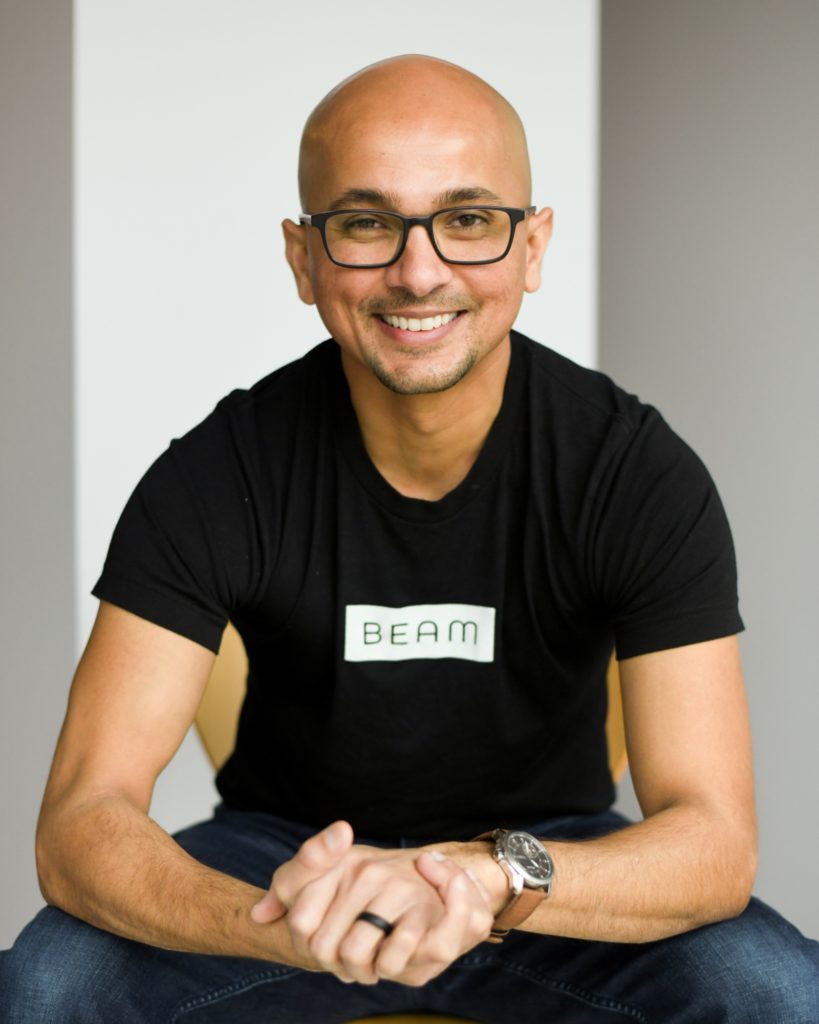
Dr. Sarjoo Patel, ’03, Beam Healthcare Founder and CEO (Photo: Beam Healthcare)
Serial entrepreneur and Beam Healthcare founder and CEO Dr. Sarjoo Patel, ’03, credits his NIU Operations Management and Information Systems (OM&IS) degree for his successful transition from a medical doctor to a health tech entrepreneur and executive.
“People ask me about my switch from physician to starting a health tech company, and I tell them it was easy with my combined healthcare provider experience and my NIU OM&IS degree,” Patel said.
Founded in 2013, Beam Healthcare offers telemedicine to hospitals and specialty clinics. Beam reduces the need for patient transfers, improves operational efficiencies, and addresses disparities in rural and urban healthcare access. Accredited by The Joint Commission, Beam serves healthcare organizations nationwide, including the Mayo Clinic Health System, Encompass Health, University of Wisconsin-Madison and Hawaii Health Systems Corporation.
In addition to Beam, Patel launched Flow, a human resources and management app designed to help organizations simplify and automate how they manage, educate and engage with their teams — all in one tool. From background checks to onboarding and training, Flow automates administrative and redundant tasks, saving its clients time and money.
“At Beam, we were running into problems with people management, especially being in the healthcare industry, there’s so much paperwork and operational demands,” Patel said. “We created our own software internally to support our needs, and now we’ve gone from hiring folks in weeks or months to literally hours. We made it into an all-in-one platform to help other organizations streamline their operations.”
Continuing to innovate, Beam is currently developing a direct-to-consumer model that focuses on proactive versus reactive healthcare.
“We are driven by the commitment to ensure every patient gets the care they deserve, and every organization has the tools they need to innovate and grow,” Patel said.
NIU Paves the Road to Business
Growing up in the Chicago suburbs, Patel was drawn to business and technology at an early age. When it came time for college, he was drawn to NIU specifically for its OM&IS program.
“I liked the balance of business and informatics,” he said. “The ‘O’ in OM&IS was a big piece. There were a lot of MIS programs out there, but the emphasis on the operations side was of interest to me.”
At NIU, Patel was active in student organizations, including serving as student government president, but described himself as a laid-back student who thrived on the relationships he built.
“Relationships were most important to me,” he said. “Barsema Hall had just opened, and for us, that was just amazing. To see an alumnus give that, I think, was good motivation for a lot of us to do well. Not only was the facility amazing, but the faculty were also highly invested in their students. They truly developed relationships with their students to help move us forward.”
Patel fondly remembers Professor Chang Liu, Ph.D., Jack Marchewka, Ph.D., a retired professor and founder of the Business Information Technology Transfer Center (BITTC), and Nancy Russo, Ph.D., former chair of the OM&IS department, as well as his counselor, Sue Goade. He recalls working with companies like eFollett on projects to solve real-world business problems. Now, as an alumnus, he wanted to pay it forward and has returned to NIU to speak to students in the College of Business and the College of Engineering and Engineering Technology.
In 2020, Patel received the College of Business Social Impact award for his entrepreneurial vision to advocate for healthcare without barriers.
Triggers to Healthcare
During his senior year at NIU, after experiencing the unfortunate loss of one of his best friends and other loved ones who were critically ill, Patel was inspired to find a path to healthcare.
“Those personal experiences were a trigger for me,” he said. “I spent time in hospital ICU settings and saw how hard nurses and physicians worked to take care of my loved ones.”
Patel graduated from NIU with his bachelor’s degree in OM&IS and began taking science classes at night while working as a software business analyst before deciding to pursue a medical degree. He completed his residency at Latrobe Area Hospital in Pennsylvania.
“I was hired as chief medical officer at a rural hospital to evolve their inpatient program to keep sicker folks locally instead of transferring them out to Madison, Wisconsin,” Patel said. “So, we created a program with all these on-site physicians, but I quickly realized financially this was not viable for our small hospital to have physicians on-site 24/7 for such a low volume of patients. Plus, we were losing patients for some specialty needs. So, long story short, that’s where the idea of Beam came about.”
One day, on the way to work at the hospital, Patel had a near head-on car collision where the other driver died.
“I realized that if that had been the end, my obituary would have read that I was a good brother, son, friend, etc.,” he said. “I realized I hadn’t given back enough in terms of service and social impact. And so, for me, it was a realization that I need to pursue everything that I want. I don’t want to live a life of regret.”
Offering Patel both social impact and personal fulfillment, and bridging business, technology and medicine, Beam was born. Patel built the company based on the lessons he learned at NIU.
“I built Beam based on my OM&IS experience,” Patel said. “First, we were going to leverage tech, the ‘IS’ part. Second, we planned to leverage core team members rather than gig-industry-type team members to serve clients in these communities. That’s the management part. Lastly, we were committed to being a paperless company from day one, especially since we were entering the tech-enabled service business. We had to be efficient if we wanted to scale, which is naturally the ‘O’ in all of this. Those were the three simple pillars. It’s not rocket science, but we’ve just executed it really well as an entity. And that is what’s brought us to where we are now — a premier telemedicine entity that is highly focused on quality and how we deliver care.”
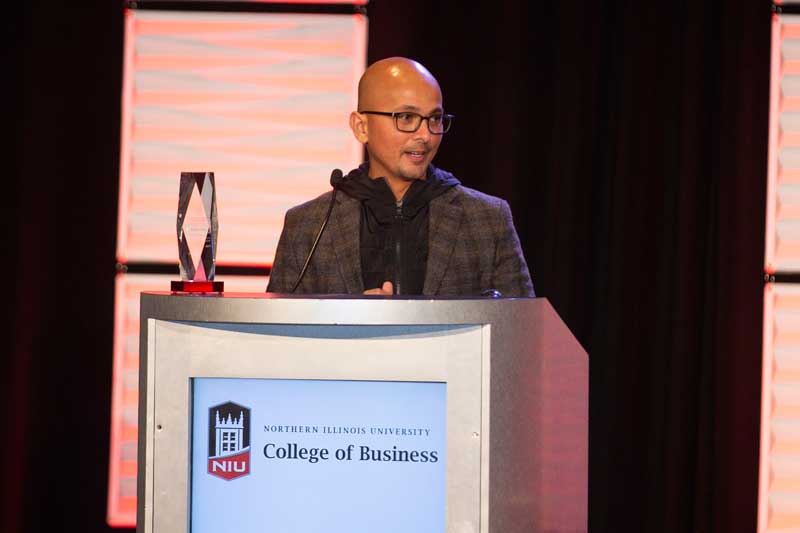
Sarjoo Patel received the NIU College of Business Social Impact award in 2020 (Photo: Northern Illinois University)
The Right Equation
Patel credits his problem-solving approach, along with strong partnerships with larger healthcare organizations, as key factors in Beam’s success before the widespread acceptance of telemedicine post-pandemic.
“I would rather fail forward; that’s always been my mentality,” he said. “Try, pivot, figure it out, and just keep going.”
Patel also highlights a balanced approach to entrepreneurship as a contributing factor to launching Beam and Flow.
“I feel like whatever I pursued evolved because there was a pretty decent balance between passion and talent on the team,” he said. “You can have a lot of passion, but if you don’t have the talent to support it, you won’t execute it. Or, if you truly just have talent and grit, but you don’t have the passion too, then you won’t persevere.”
“Finally, probably the most important lesson I learned is patience,” Patel continued. “Initially, especially as a young entrepreneur, you want to push forward and keep pushing. I realized that if you push too hard, you’ll push people away from you. There will be people who disagree, and that’s okay, and let them. Walk away. Educate and nurture, then let people join you at their own pace.”
Patel has a personal litmus test to assess his life balance. He knows when he doesn’t have time for his hobbies of writing, illustrating or gardening that there is something he is not doing right.
“You need to know what recharges you,” he said. “When you step away is often when your creative ideas actually come. So, instead of pushing forward, step back to see the big picture.”
That’s just what Patel did when starting BeamUp, a nonprofit supporting orphanages in Mexico and Papua New Guinea. By empowering local healthcare providers and facilitating access to medical care for these orphanages, BeamUp demonstrates the potential for telemedicine to effectively serve at a non-profit level.
“I want to move healthcare — and access to affordable healthcare — forward,” Patel said. “Instead of watering the seeds of hopelessness or frustration, I focus on watering the seeds of possibility.”
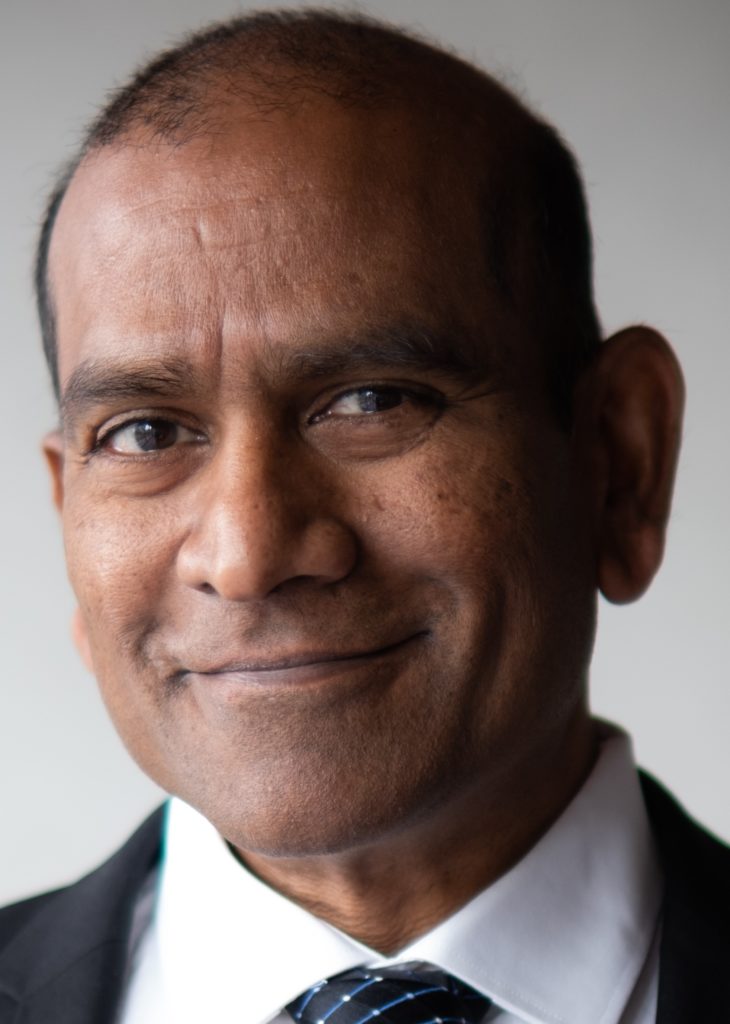
Aridica Founder and CEO Chockalingam “Palani” Palaniappan, M.S. ’92, Ph.D. ’93 (Photo: Palani Palaniappan)
Life sciences innovator Chockalingam “Palani” Palaniappan, M.S. ’92, Ph.D. ’93, is driven by a powerful vision: a future where cancer no longer poses a threat to humanity.
Through Aridica, the company he founded, Palaniappan is developing a breakthrough technology that will support efforts to make this vision a reality.
CAR T-cell Therapy
“There is a revolution happening in the field of cancer medicine,” Palaniappan said. “Beginning at the start of this century, a concept referred to as ‘living drugs’ has saved some 40,000 people from incurable cancers who have now been living cancer-free for well over a decade.”
CAR T-cell therapy, a type of living drug, differs significantly from traditional cancer treatments.
“A patient’s very own T cells are collected, isolated, genetically engineered and reintroduced into their body to attack cancer cells,” Palaniappan explained. “With a mere single-dose treatment, this personalized therapy has brought patients back to life from their deathbeds. This technology is nothing short of a medical marvel and is bound to eradicate cancer in the future.”
Despite its promise, Palaniappan said CAR T-cell therapy faces many hurdles in reaching the masses, as the sophistication required for personalized medicine is not affordable, accessible or scalable. It has also only been approved for specific types of cancer.
In 2023, after spending 25 years in leadership roles focused on innovation and research and development at GE Healthcare, Life Technologies, Terumo BCT, Epic Sciences, Ortho Clinical Diagnostics and QuidelOrtho, Palaniappan founded Aridica. Today, as the company’s CEO, Palaniappan is introducing a simple-to-use technology that delivers high-quality immune cell isolation — a critical first step in ensuring the success of CAR T-cell therapy, as well as applications in diagnostics and research.
“Aridica’s novel technology is novice-friendly, inexpensive and can be used nearly anywhere in the world,” Palaniappan said. “It will play a crucial role in shaping the field of immunology in curing cancer and autoimmune disease by radically improving the isolation of immune cells, thereby enabling basic scientific research, diagnostics and therapy. Aridica’s technology has the potential to contribute to the democratization of personalized medicine.”
Palaniappan describes the current blood separation technology used to isolate bulk immune cells as an outdated process.
“The current technology is incredibly subjective, labor-intensive, highly variable, and requires centralized logistics,” Palaniappan said. “It is not scalable for mass deployment as it relies heavily on high-skilled scientists and technicians. Aridica’s technology, however, massively simplifies the process with a simple microfluidics push-button technology, making it reproducible, fully scalable for varying blood volumes from pediatric to geriatric settings and deployable in decentralized settings. Aridica’s technology, protected by internally developed intellectual property, also reduces massive quantities of both plastics and medical-grade waste, helping save the planet and making it a disruptive innovation.”
A Career of Medical Breakthroughs
In 2020, while serving as the chief innovation officer of Ortho Clinical Diagnostics, Palaniappan fought another invader of human health — COVID-19. He stewarded the COVID-19 program, fostering a team effort across the entire company to produce one of the first COVID-19 tests just weeks after the pandemic began.
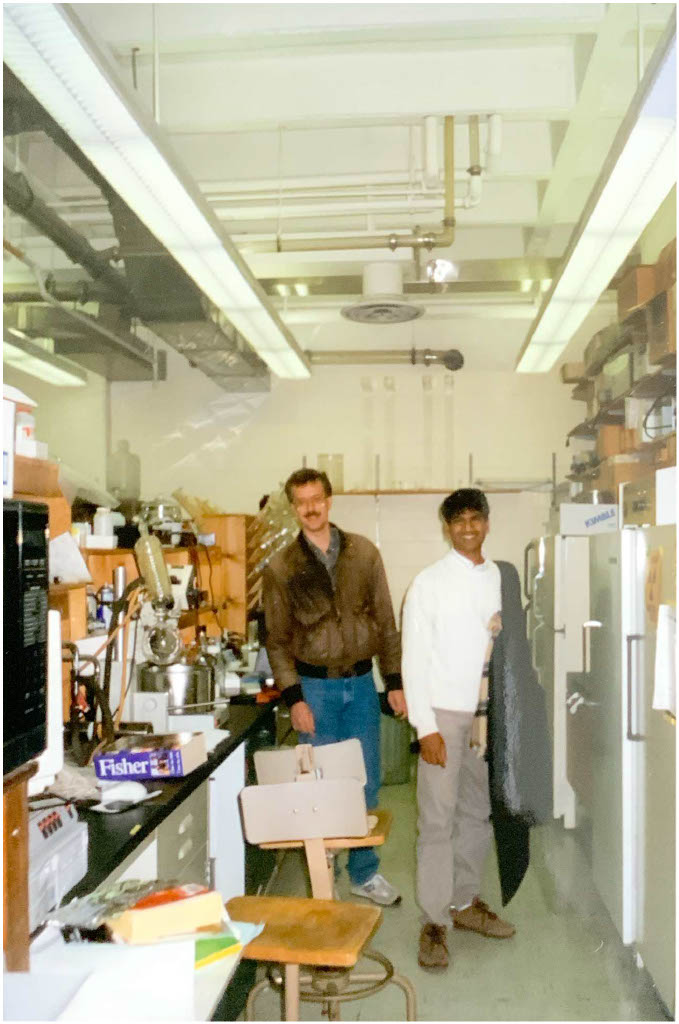
Chockalingam “Palani” Palaniappan (right) stands with Patrick McCarthy (left), Coordinator of Microbiology and Genetics Labs. (Photo: Palani Palaniappan)
During Palaniappan’s tenure at GE Healthcare (a legacy of Amersham Biosciences based in Piscataway, New Jersey), he made significant contributions in both scientific and leadership roles.
“Many medical breakthroughs are enabled now through the company’s significant role in mapping the entire human genome for the first time ever in the early 2000s,” he said. “I led teams on the development and manufacturing of DNA polymerase enzymes to enable easy deciphering of the human genome. Being a part of helping to orchestrate this was a pivotal point in my career.”
The Foundation of Education
Palaniappan grew up in a middle-class family; he was raised by a father who worked as a teacher and a mother who was a homemaker. Until he was nearly ten years old, his family lived in a rural Indian village that lacked running water and electricity. With no access to battery-operated transistor radios or TVs, the environment was quiet and resourceful. Education emerged as a deeply cherished family value, viewed as a vital pathway to achieving greater life ambitions.
“In elementary school, I studied under a hurricane lamp at night and often under open space in the daytime,” Palaniappan said. “My parents ensured that my siblings and I got the best education. For high school, we were sent to boarding schools in bigger towns to gain broader exposure to life and gain an independent assessment of the world. My parents often sacrificed their own personal interests and had a singular interest in their children’s welfare.”
Palaniappan said the boarding schools focused on shaping students to become commissioned officers in the Indian armed forces. Although he never served in the military, the lessons shaped his value system and leadership qualities. He remembers being appointed team captain at the tender age of 14 for a 50-member crew and overseeing the development of younger children aged 10 to 12.
“I had the responsibility as the team leader for these children each day from dawn to dusk to mold their conduct to become future officers in the armed forces,” he said.
Immersed in NIU Research and Innovation
In his early twenties, Palaniappan moved to the United States to pursue a master’s degree and Ph.D. in molecular microbiology at NIU. He described the experience as transformative.
“I was surrounded by high-caliber professors, scientists and students who provided the right ecosystem to learn, thrive and prepare for a bright future,” Palaniappan said. “My NIU education was the foundation of my success.”
“It was also the late 1980s,” he continued. “India at that time was far behind in technological innovations ranging from telecommunications, electronic industry, transportation, modern high-rise buildings, healthcare, life science research and space exploration advancements,” he said. “It was a fascinating experience, aspiring for a better life, coming to the United States of America, which respects meritocracy, talent, diversity and the role of legal immigrants in shaping this wonderful, adopted land. I subsequently became a U.S. citizen, but I am proud to see that India has become a force to be reckoned with. In 2025, with firm determination for excellence, it is now the 4th largest economy.”
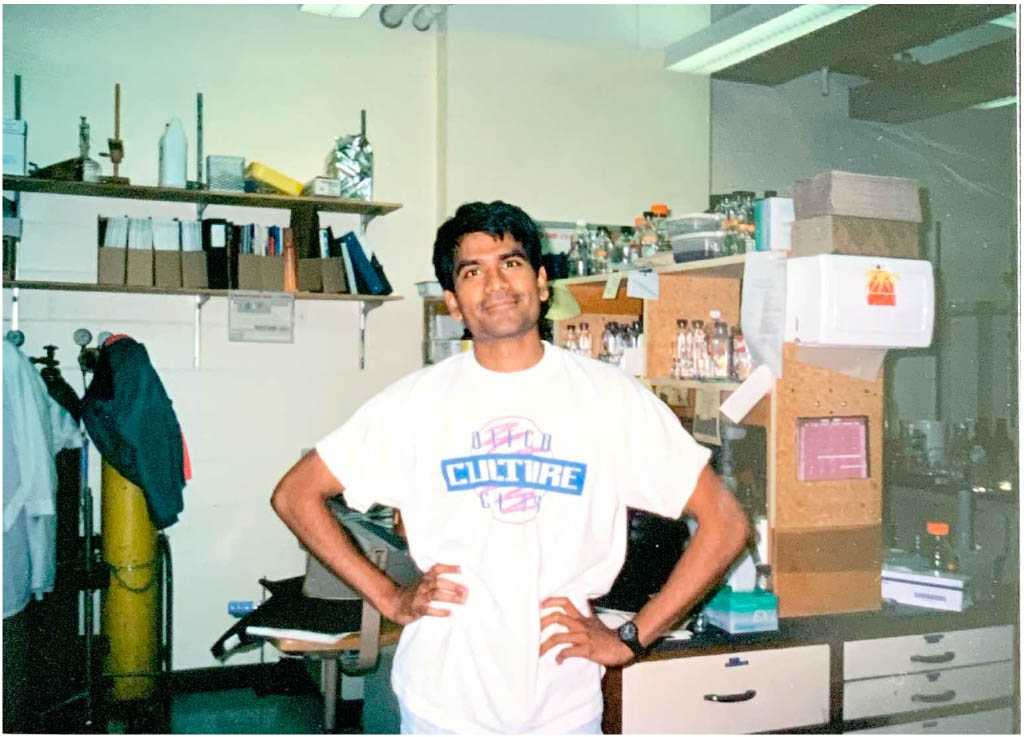
“Palani” Palaniappan poses in Professor R. Meganathan’s lab while at NIU. (Photo: Palani Palaniappan)
Palaniappan said the diversity of the curriculum in the Department of Biological Sciences appealed to him.
“NIU offered an interdisciplinary curriculum that touched on nearly all aspects of biology, from macro to micro to molecular studies from humans, animals and all living forms, all in one place with the diversity of research programs by leading professors in their respective fields,” he said.
Under the mentorship of Professor R. Meganathan, Ph.D., Palaniappan earned his Ph.D. and was involved in Meganathan’s research program, which focused on the interaction of the human gut flora E. coli to synthesize Vitamin K2, an essential component of the human blood clotting mechanism. The research yielded critical and original scientific findings, resulting in several publications. In addition to being a research scientist, he enjoyed working with undergraduate students as a teaching assistant.
“I began to operate as an independent scientist under Dr. Meganathan’s guidance and the extensive collection of talented professors,” Palaniappan said. “Dr. Meganathan had a very significant impact on my professional career. My Ph.D. thesis committee members, Drs. Vary, Starzyk, Hudspeth, and Hanzely were also instrumental in creating a high-quality learning atmosphere.”
While at NIU, Palaniappan faced the profound loss of his father to brain cancer. The year-long journey from diagnosis to his passing was challenging, as living far away and dealing with limited funds made it difficult to be by his father’s side or attend his funeral. Despite these obstacles and the weight of his grief, Palaniappan found strength and support within the Huskie community. As he honed his skills in scientific reading, writing, public speaking and grant writing — essential components for his future professional success — he also formed valuable friendships with professors, staff and fellow students.
“We worked very hard but also played very hard,” he said. “We went to sports bars, enjoyed a beer and ate Chicago-style chili dogs. We threw darts, played pool and had lengthy conversations on a range of topics. It was having fun that shaped us as humans and, importantly, good humans!”
Reflection and Guiding Principles
Palaniappan’s fondest memory from NIU was forming lifelong, bonded relationships that expanded his circle of family and friends.
As a father, scientist, entrepreneur, and Huskie, Palaniappan is motivated by the desire to help others and is guided by the principles of hard work, authenticity and belief in himself and those around him. He strives to be better every day.
“I never want to let myself down or, most importantly, let down the people who believe in me. I always try to do the right thing and be a role model,” Palaniappan said. “It’s a gratifying feeling to touch millions of patients’ lives every day through the technologies I’ve helped steer. That caring and nurturing spirit that guides me is the true definition of a Huskie.”
Help inspire discovery and innovation at NIU. Visit niuforward.com.
James Rowe, M.S.Ed. ’99, a committed special education science teacher at Clare Woods Academy in Wheaton, Illinois, earned the prestigious Golden Apple Award for Excellence in Teaching in June 2025.
“This is a wonderful honor. I don’t feel like I have done anything special to deserve it,” said Rowe. “I work in a school with so many outstanding teachers, paraprofessionals and staff. I would not have received this nomination if it weren’t for them. We all work together to be there for our students. It’s a validation of the staff at Clare Woods Academy.”
Rowe describes Clare Woods Academy, a non-profit alternative day school for special needs students, as “outstanding” and “a place where students accomplish great things.”
He said, “When a school is not able to meet the needs of a student in their setting with modifications and support, they send them to us. We work to help students succeed in school when a regular education school doesn’t work.”
Rowe’s son, Graeme, is also an educator at Clare Woods Academy. He works as an academic assistant, supporting students in their learning. His wife, Dr. Patricia Mannion Rowe, who earned three master’s degrees and her Ed.D. from NIU, is also a special education teacher specializing in teaching science at York High School in Elmhurst, Illinois.
“When I first learned about the Golden Apple Award nomination, I thought the email was a phishing attempt and deleted it,” said Rowe. “I really wanted it to be real, so I took a picture of it and sent it to my son. He sent it to my wife, who looked up the sender and said it was real. I am so glad I didn’t empty the trash!”
Finding Perspective
James Rowe was born in Kampala, Uganda, but grew up in Evanston, Illinois. His father, John, a New Yorker, met Rowe’s mother, Mary, a native of London, at the University of Cambridge. John was working on his Ph.D. in African history. They married and moved to Uganda for John’s research. James and his brother, Adam, were both born there. In 1970, the family moved to Evanston, Illinois, where John taught at Northwestern, and Mary raised their sons while working as a social worker.
“I was extremely fortunate,” said Rowe. “I was able to attend Martin Luther King Jr. Laboratory School in Evanston. This school was built in the Black community and was given top funding, cutting-edge equipment, and the best and brightest teachers. White families had to apply to attend the school. If they were accepted, their children were bused to school. Talk about progressive ideas, right?”
Rowe began teaching while attending Evanston Township High School, but had not yet discovered teaching as a career path. On Saturdays, he volunteered at the high school to teach young children how to swim. Joe Dunn was his first teaching mentor, as he helped Rowe to develop and refine a hands-on approach to teaching.
“I would share with John and Mary, my parents, all about the lessons and my students’ successes,” said Rowe. “They would ask me if I wanted to be a teacher while we had tea and ate lunch together. I always responded, ‘I can’t be a teacher, that’s too hard.’”
Classroom and Experiential Education
Impactful high school teachers Dorothy Saw and Bill Branch taught Rowe that people are stronger when they welcome and embrace different people, cultures and religions. He encountered equally strong teachers while attending Earlham College in Richmond, Indiana, where he double-majored in sociology and anthropology, as well as African and African-American studies.
“Steve Nussbaum taught me that the meaning of things could be questioned,” said Rowe. “Professor Steve Butler introduced me to contextual thinking, Paul Robeson and African-American culture. Professor Frank Chiteji taught me about African history and the diaspora. Cathy Winkler showed me how to travel to another country and embrace the language, culture and beliefs of the people you are visiting.”
For three months, Rowe studied abroad in Kenya, living with a family in Tiriki, a village about ten miles from the Ugandan border. They had no running water, no electricity, and no paved roads. He saw firsthand their struggles with health and education.
“I attended the funeral of a two-month-old baby who died of dysentery. I learned that this neighboring family did not have enough money to pay for the medicine their child needed. It was devastating to learn that fifty cents could have saved this child’s life.”
“My host family was only able to pay for school for their two oldest male children while the other ten stayed home and worked on the family farm,” said Rowe.
Notably, when he later shared this difficulty with his parents, they offered to help the host family pay the tuition so the other children could attend school. This reinforced for James the importance of supporting others in their education.
Rowe married Patricia Mannion and they moved to Pittsburgh, Pennsylvania, so Patricia could pursue a master’s degree in geology at the University of Pittsburgh. They then moved to Rochelle, Illinois, to pursue graduate degrees at NIU. James’ master’s thesis was on the breakdown of the Ugandan social structure as a result of the AIDS epidemic and twenty years of civil war.
“The topic was both fascinating and depressing when one contemplated the loss of life,” he said. “I eventually talked to my thesis advisor about how disheartening the research had become. He suggested taking some education classes for fun, and I enjoyed them so much that I changed my major and got an M.S.Ed. in special education.
A Student for Life
Today, Rowe still enjoys learning new things. Through ongoing professional development, he has gone 500 feet underground to observe a working coal mine in Southern Illinois, learned about the Illinois aggregates industry, toured a local water reclamation district facility, learned about flood control, studied sustainable agriculture, and visited an active oil field and refinery. He says that being able to share his experiences with his students and apply the information in lessons makes learning far more interesting and engaging.
“I am a reflection of my life’s experiences and the nurturing support I have received from my teachers, friends, family and especially my wife,” said Rowe. “I am and have always been awestruck by my wife. She is a truly outstanding educator and is a National Board Certified Teacher. She discovered while teaching college courses as a graduate student at NIU that science had not been truly accessible to some high school students. She shifted her career path to high school teaching and became certified in both special education and multiple sciences. We both teach special education and science. We bounce lesson and lab ideas off each other and discuss successful modifications for students to use in class.”
Clare Woods Academy has become Rowe’s second home and his extended family.
“Clare Woods’ students, well, all students, are our children. They’re our future. I hope I can help our children succeed.”
Feedback Form
Please provide feedback here or report any errors.